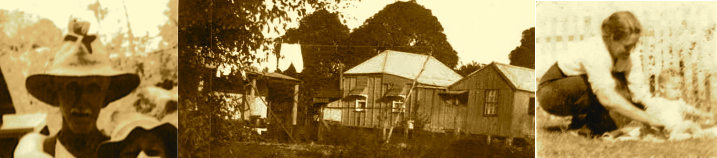
Newspaper article – Townsville Bulletin (date 1990?)
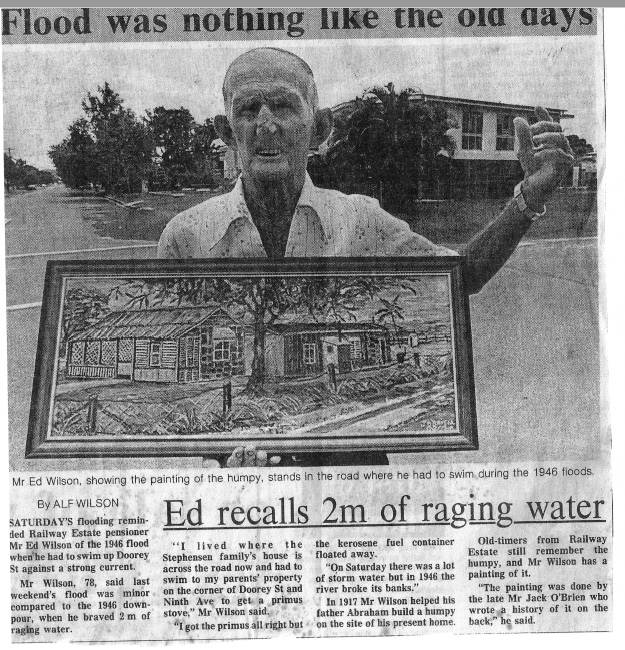
(Note – this is not a good scan of the newspaper article – anyone having the original – could you please scan a very high resolution version and email to me so I can update this – thx). Also – the details of the Townsville Daily Bulletin article (date, page), so that I can reference this.
The article stated:
Ed recalls 2m of raging water
Saturday’s flooding reminded Railway Estate pensioner Mr Ed Wilson of the 1946 flood when he had to swim up Doorey St against a strong current.
Mr Wilson, 78, said last weekend’s flood was minor compared to the 1946 downpour, when he braved 2m of raging water.
“I lived where the Stephensen family’s house is across the road now and had to swim to my parents’ property on the corner of Doorey St and Ninth Ave to get a primus stove,” Mr Wilson said.
“I got the primus all right but the kerosene fuel container floated away.
“On Saturday there was a lot of stormwater but in 1946 the river broke its banks.”
In 1917 Mr Wilson helped his father Abraham build a humpy on the site of his present home.
Old-timers from Railway Estate still remember the humpy, and Mr Wilson has a painting of it.
“The painting was done by the late Mr Jack O’Brien who wrote a history of it on the back, he said.

