Christopher and Catherine Wilson (nee McFall or Bunton/Bunten/Bunting) – their missing children from the family tree

Christopher Wilson married Catherine Bunting (or McFall) on 14 March 1853 at Moyntaghs-Armagh.   So far I know the rough history of the younger three of the Wilson children – Thomas, Robert and Abraham, but nothing of the older ones.  More information on the other children, especially the older ones, might assist in further tracing both Christopher’s and Catherine’s family trees.

As I’ve said in a previous post, Catherine appears to have used her step-father’s surname earlier in life, so her history is not easy to trace, without knowing about her mother’s marriage to Thomas Bunting.

According to Catherine’s death certificate, Christopher and Catherine had 8 children in total.  Who were they, and did they also emigrate?

A search for the earlier born children were not easy to find, as Ireland did not have civil records of births, deaths and marriages until 1864 (however there are records of non-Catholic marriages from 1845 onwards).  So children born earlier than this only have christening dates (as I understand).

The Children are:

William John Wilson, born approximately 1854-55; died after 1922 (still living at the time of Catherine’s death)

Christopher Wilson – born  1858-59;  died after 1922 (still living at the time of Catherine’s death)

Thomas Andrew Wilson – born 1865; died 1945

Robert Wilson – born 6 June 1866; died 1915

Edward Wilson – born 2 June 1869; Christened: 803 Lurgan No2, Armagh,  died before 1922 (deceased at the time of Catherine’s death)

Emily Wilson – born 4 November 1871; Christened: 803 Lurgan No2, Armagh, died before 1922 (deceased at the time of Catherine’s death)

Mary Wilson – born 15 Feb 1875, died before 1922,

Abraham Wilson – born 27 June 1876, in Derry-Add; died 1969.

The Children’s birth records all list Catherine’s maiden name as Bunting, except Abraham’s where the name ‘McFall’ is listed (another mystery – why the name change then?).

What happened to the Children?

We know that Thomas, Robert and Abraham moved to Australia.

There are no death records for Edward, Emily, or Mary Wilson (on the PRONI database that I could search), but it is likely they died prior to Catherine and sons departing Ireland for Australia in 1891.

According to one of Abraham’s sons, the older two brothers (William and Christopher) possibly emigrated to the United States of America.

Given William and Christopher were listed as still living at the time of Catherine’s death, possibly there was still communication between the brothers in Australia, and the brothers in the USA (if they did emigrate there).  Should the descendants of William and Christopher be looking for family history on their mother, then hopefully they know about both of Catherine’s maiden names i.e. McFall, and Bunting.

Robert Wilson (1866 -1915)

Robert Wilson was the brother of Abraham Wilson.  He was born 6 June 1866 in Armagh, Ireland.

He emigrated to Australia with his mother Catherine and Abraham in December 1891.

He appears to have had a troubled life, but I don’t have too much information on him, other than that he lived in Rockhampton (with Abraham) for a period of time, and possibly moved to Townsville.  There is also the possibility that he might have been in the Stewart Creek Gaol for a while (as my check of electoral rolls for the period shows a Robert Wilson as living there – but it may not be the same Robert).

My hunch is he had trouble adapting to life in Australia, got into trouble with the law and ended up in gaol for a brief time.  However his family (especially his mother Catherine and brother Abraham) were supportive of him, however  their support was not enough to help him – given he died at a comparatively younger age.

Robert eventually died 5 November 1915 of  ‘Melancholia’ (severe depression) and ‘general debility’.  At the time he was living in Mackay Queensland.  He did not marry or have children.

William Smyth (b. 1856) – possible brother of John Smyth?

Last year I came across a birth certificate in the family records, and I initially thought it had been included in error.  The birth certificate was for a Mary Smyth, but it was clearly not Mary Jane Smyth (daughter of John Smyth and Isabella Shiels), as the date, parents and place of birth were different.  Then last week, the penny dropped – this was the birth certificate of a relative of Mary Jane.   It appears the father, William, might be John Smyth’s brother, and was living in Townsville.  If that is the case  then Isabella and her daughters might have had  family support after all when John died.


The birth certificate details are:

Child:  Mary Smyth b,  7 Feb 1887

Father:  Wiliiam  Smyth

Age 31 years

Birthplace:  Athy Kildare Ireland

Occupation:  Labourer

Birthplace:  Athy Kildare  Ireland

Mother:  Bridget Welsh

Age:  29 years

Birthplace:  Acies Queens County Ireland

Children living (of William and Bridget):

– William (1 year old)

Children deceased:

– 1 X Female

Witness to the birth:   Nurse – Mrs McDeregal


I suspect when Isabella sent her older daughters to the Townsville Orphanage, she might have placed her younger daughters with William Smyth and family (who probably couldn’t look after all 5 daughters).

I’ll investigate further when I get some time.

Isabella Smyth (nee Shields)

Well I’ve received some new information on Isabella Smyth (nee Shields), mother of Mary Jane Raynor.

John and Isabella Smyth and their four daughters Martha, Margaret, Anna Bella and Eliza Jane departed Glasgow on 10 August 1882 on the ship “Stirlingshire” arriving in Townsville on 7 November 1882 (IMM/117) The Log entry states that John’s age is 32, Isabella 33, Martha 6, Margaret 3, Annabella 1, Eliza inf.  Their destination in Townsville was listed as ‘Mr Robinson, Milkman’. Possibly John had an assisted passage and was indentured to work for Mr Robinson.

John died on 16 December 1883 at the Townsville Hospital of dysentery.  This was just over a year after arriving in Townsville (arrived November 1882). Isabella was then five months pregnant. She would have been unable to work at this time, and there was no Government welfare assistance as there is today. So she must have had a very difficult time, and I had previously said in an earlier post that I wondered how Isabella fared.

Jane Mary Smyth was born on 10 April 1884.  Isabella was left to raise 5 girls on her own.  The new information I received was that Isabella admitted Margaret and Annabella to the Townsville Orphanage on 6 Aug 1884 and they were discharged to her on 16 April 1886.  On 16 October 1886 she admitted Annabella and Eliza.  Annabella was discharged on 11 May 1893 and Eliza on 7 August 1894. So Isabella probably did not fare too well in the earlier days in Australia.

Townsville Orphanage extract

Isabella had a tough life. John and Isabella probably came to Australia to escape poverty in Ireland. On arrival, John died, and Isabella would have spent many years working hard in low paid employment to make ends meet. When she couldn’t make ends meet, she had to put her daughters in the Townsville Orphanage. Her hard life must have taken its toll because she eventually died 12 April 1909 aged 63 years. In the last 7-8 years of her life she suffered an illness which eventually took her life.

Thanks for the information on Isabella, it does explain a lot.  While her life was difficult,it is credit to her that she managed to raise her daughters, and all went on to live good lives.  I know that Mary Jane and Joseph Raynor must have been a very unlikely match, but all the Raynors I’ve ever met turned out well, so Isabella must have done something right.

Back online

I’ve not done any posts for the last 12 months, as I temporarily stopped research on the family history.  I’m now finally able to get back into it.

At the time I stopped posting, I was researching three  issues:

(1)  Joseph Raynor – looking for clues on what Joseph might have been living and doing prior to getting his job on the SS Bobby Towns.  So I’ve been looking at the history of the SS Bobby Towns, the Seaman Union.

(2)  Joseph Raynor’s brother – there is a photo of Joseph Raynor and his brother – who was the brother?  Where was the photo taken?  It appears to be a professional photo, taken in a studio?  If so, it might be stored in Archives somewhere, and perhaps show the name of the brother?  So I’ve been looking on the internet on any information relating to Townsville photograph studios that operated in the early 1900s.

(3) Christopher Wilson – father of Abraham Wilson – when and where exactly did he die in Ireland?  It is known he died in a shipyard accident somewhere around Belfast.  If I can find the date of death, I might be able to get a copy of his death certificate.  Then we might have some information on Christopher’s birth, parents and further family ancestors.

I don’t have any answers on the above yet.

Dancing Lillian

Lillian was the daughter of Abraham and Emily and Wilson, and recorded her some of her memories of her parents, their home and her life in general in an article for ‘Remember …. Writers in Townsville‘.  The booklet contained a number of stories by older Townsville residents who talked about what life was like in Townsville in the  first half of the 20th century (1900s – 1950s).   Lillian’s story appearing in the booklet was the following:

Unable to do more than a waltz, Lillian Hatton learned specialized dance steps by mixing in the crowd that went to all the balls.  Later she took part in exhibition dancing and won Townsville competitions.

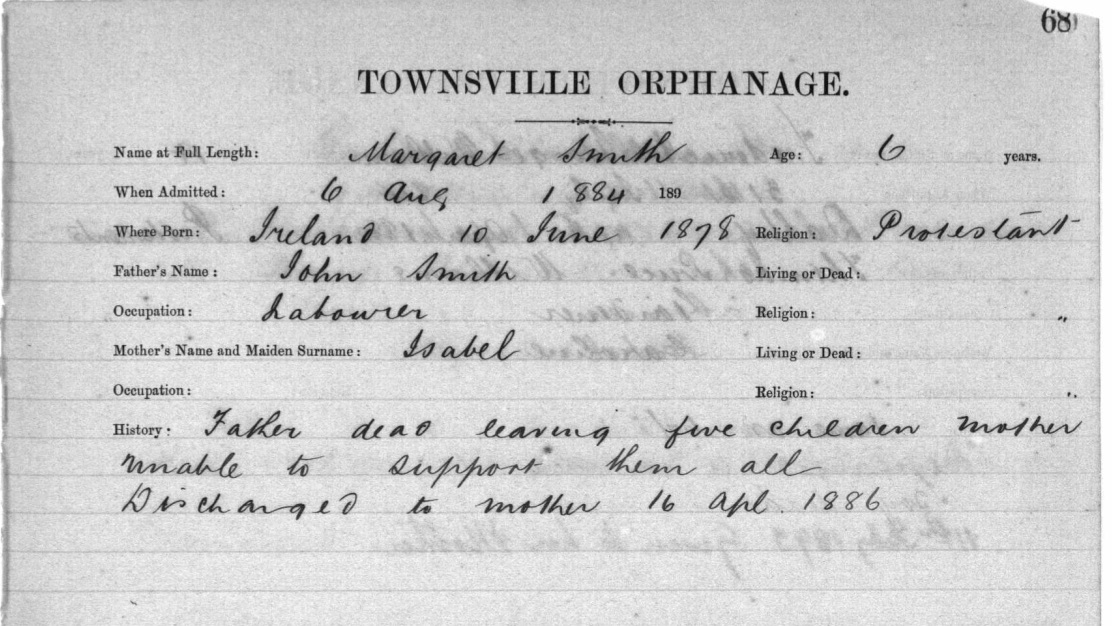
Born, Lillian Wilson, she grew up in a sculpturesque house along a dirt road between the city and Ross River.  Her father, Abraham, paid twenty pounds for the piece of land at 77 Ninth Avenue on the corner of Doorey Street in Railway Estate.  “He could have had the next block as well but never had the extra ten pounds to pay for it,” Lillian said.

Her mother, Emily Coleman was born on a North Queensland Station where her father, a builder, had gone droving.  The blacks threw spears that landed at the back door, Lillian was told.  “Grandmother had to let fire with a rifle to frighten the blacks off.”

As a child, Lillian laughed at her mother’s stories.  “Mum had a lovely lot of crockery ‘cause she came from a good home.  She told me when they first went to Railway Estate, my father put up this little humpy with hessian walls.  He oiled the hessian and she lived in that.  There was bush and a dirt road, no houses.  One day Mum walked to Garbutt, visiting and came home to find the goats had eaten the walls down.  They’d smashed her crockery and she sat down in the middle of it and cried,” Lillian said.

Abraham Wilson was sixteen, when he arrived in Australia from Ireland.  He played in brass bands when he was young and although talented, was a poor business man.  “He was a wonderful clever man, a good house painter, and he could do beautiful oil paints,” Lillian said, “but he was too soft.  People gave him a sob story and he’d do the job for half the price.”

Part of her home was built from tins.  Lillian recalls how here brother Eddie was only a kid at school and each afternoon he walked with a wooden cart to South Townsville and collected benzine tins.  After his day’s work, their father flattened these to build the house.

When Lillian and her four brothers Henry, Edward , Bill and Gordon were kids the floors were dirt.  Their mother sprinkled water, swept and it was like cement.  Her brother ended up putting in a cement floor.

Lillian said proudly, “Yes, we lived in that.  My mother liked things pretty.  Everyone who came inside was surprised.  They said it was like a little doll’s house.

“I was only telling my brother about the other day,” Lillian said, “about a boy who was in my class at school.  His family was well off.  When I was only a little girl coming home from school I walked into our house (I suppose it was a pretty poor looking place) and this boy was there with his mates.  They stood there and threw off at the house.  I never forgot that.”

When she was older, Lillian was at Picnic Bay for the Thursday night dance.  That boy, was a man and he asked could he take her home.  She refused and thought, “What an insult!”

There was a saw mill and her mother told of the days when the water was deep and big ships came down the Ross River to pick up timber. “But now it’s full of silt – wants cleaning up – that’s why the mangroves  take over.”

Oonoonaba had a few houses and Lillian and her mother walked there.  On high tide they couldn’t get through because of the gullies filled with water.  “We walked everywhere because we couldn’t afford the bus,” she said.  Her father walked to and from his job as a house painter, every day of his life.

In 1946, flood waters flowed through the windows, over ther mother’s sewing machine and the stove.  Cracks between the sheets of tin were filled with silt.  They had stretcher beds, mattresses, dining table, and chairs stacked high.  Her father had put his painter’s planks underneath the roof where there there was no ceiling and piled things on top.

Lillian worked long hours removing crockery from the mud.  “Lots of it was broken,” she remembered.

Her first marriage was a mistake. “It was a disaster, I was too young,” Lillian said.  “My mother just about reared my daughter while I was out working.”

While doing hem stitching and button holes for the Singer Machine Company in the war years, she found addresses of people overseas and sent food parcels.  An officer in the Navy tried to talk her into joining the forces.  She wanted to but couldn’t leave Gloria with her mother, it would have been too much for her.

“I can remember the end of the war, the excitement down at the railway station.  All the stores closed their doors, there was dancing in the streets, everyone grabbed you, kissing one another, cars with tin cans tied on the back going up and down streets.”

The next job she had was with Holloman’s, a large store where she was in the china department.  From there she went to Sydney for four years, worked for Berlei stitching corsets, and slipped into the dance crowd.

Since the age of nineteen, Lillian had been dancing.  In Townsville, Ann Roberts was teaching and Ray Bird knew her very well.  They went there on Thursday nights to help.  She gave them the use of her hall on a Sunday night.  Lillian won competitions for quickstep and waltzes.  “You won your heat, then the semi finals and the finals.  I was in my thirties when I won the main exhibition and danced until I was forty.  It was beautiful,” she said.

A group travelled by rail motor for a ball where Lillian and Joe Wyllie, a teacher, did an exhibition of fox trot and tango.  There was no pairing off with one another, they went as a partner.  Once she asked Noel Buckby who lived in Ninth Avenue, ‘How about coming to the ball and partner me?’ and was waiting in her long evening dress when he turned up on his motor bike.  Lillian suggested he might ring a taxi.  She laughed about those times and said, “I loved dancing, but never had photos taken.”

So when she went to Sydney, Lillian found a crowd of ballroom dancers, and made friends quickly.  She was partnered by a man who won second place in the Australian Championships.

About two years after returning to Townsville she met Jack Hatton at the Seaview dance.  He was on holidays from New South Wales.  “Jack could dance but he was not a good dancer,” Lillian said.  He found a job on earthworks, building the Mount Stuart road.  Classed as one of the best operators in Townsville, his machinery was hanging over the cliff half the time.  Jack used to say, ‘A man came up for a holiday and got snagged’.

In their first years of marriage, Lillian went back home to Ninth Avenue, while Jack was in New Guinea for the Commonwealth Department of Works.  They moved to several houses in Charters Towers Road, Tenth Avenue, Gladstone and Ninth Avenue again.

Finally Jack found a home while looking at earth moving machinery on Eleventh Avenue.  He was talking to a man working on the site and when the bank refused their loan because they didn’t have the full deposit the stranger went guarantor for one thousand dollars on the relocated council house.  They paid seven thousand dollars for house and land.  Happy with their purchase and the help they’d received, they made it a comfortable home over twenty six years.

Jack liked fishing and in the sixties they travelled to  Cape Tribulation with a boat on top of a utility he bought for two hundred dollars, and towing a poptop caravan.  It was packed to the hilt.  Jack said that Lillian always took everything but the stumps of the house.  He liked his beer too, and when they got to Mossman she had a couple of cartons under her feet.

“We were told you couldn’t get anything up there,” Lillian said.  They arrived to see a big house with a shop and gas.  “We took everything and found we could bought anything we wanted,” she said.  There were two other couples staying rainforest on the beach.  At low tide they walked out to the reef and threw a line into deep water for fish.

When Lillian sent food parcels and tinned meat to England during the war, she received small gifts in return.  She still has a cake of soap with no smell, from the The Great Exhibition  1851 to 1951 Festival of Britain, wrapped in a handkerchief.  Two scarves she’s had since the war: one that her mother tied around her hair has the coronation scene; the other is brand new, depicting the romantic city of Venice.  “Lots of things I throw out or I give away, I ‘m not a hoarder.” Lillian said.

And the most precious keepsake was given to her by one of Gloria’s boys.  “Stephen played soccer at school.  What a lovely thing for a little boy to do: he wrote a note and gave me one of his soccer badges.  I’ve put a note in with it for him.” She had three grandsons – Terry, Stephen and Darren.

Lillian has lived through the triple tragedy of losing her husband Jack, daughter Gloria and grandson Terry who died from an asthma attack.  He was well liked in soccer training and a plaque was placed at the Murray sports complex.

Lillian Hatton summed up her memories:  “I’ve had a lot of unhappiness but on the whole I’ve enjoyed my life.  The highlight was my dancing years.”

Appearing in:  ‘I remember …… Writers in Townsville’

Printed by:  WRITERS IN TOWNSVILLE

Falling Star Publishing Co

Box 5101 MSO Townsville 4810

Queensland Australia

ISBN NO: 0 9594303 1 8

Copyright:  Belongs to the individual authors.  With the authors permission, this material may be copied for non-profit making purposes
Where were family members during Cyclone Sigma 26-27 January 1896?

Cyclone Sigma was severe, with 18 people in Townsville losing their lives.  Most of these drowned when the Ross River broke its banks, with parts of Town having a flood depth of 2m.

George and Jane Coleman, and their children, including Emily Jane (then aged 14 years), were living in North Queensland at the time Cyclone Sigma struck Townsville.  The family were either still living at Wyandotte Station (near Cardwell), but more likely had already moved to their home in Fifth Ave, South Townsville.  (To confirm,  I probably need to check where their children were born – Emily was born at Wyandotte, but many of her younger siblings were born in Townsville, its simply a matter of finding out which sibling was first born in Townsville to best work out when the Colemans moved there).

Abraham Wilson was still living in Rockhampton so was unaffected by Cyclone Sigma.

Joseph Raynor, as yet unmarried, could have been in Townsville, but this seems unlikely.

Isabella Smyth (nee Shiels), and her daughters, including Mary Jane Smyth (then aged 11 years) were living in Townsville somewhere, possibly in the City area, or at Stewart’s Creek (something I’m currently researching).

I’ve come across an old article in a scanned Newspaper on National Library of Australia, which describes Cyclone Sigma in detail, which I’ll include in a post soon.

SS Roma arrives Rockhampton, Qld, 18 Dec 1891

I recall my grandfather (Poppa) telling me that his father  (Grandpop) came from the County of Armagh to Australia in 1892.  Abraham’s obituary further stated that he arrived at Rockhampton, Queensland, Australia, in 1892.

The following newspaper clippings were found via the National Library of Australia (NLA) online Newspaper archives ‘Trove’.  (www.trove.nla.gov.au)

Abraham Wilson was onboard SS Roma, travelling in steerage, London to Rockhampton.  SS Roma was apparently a cargo ship as well, therefore it stopped Rockhampton (& other ports) before arrival in Brisbane.  Abraham was travelling with his mother, Catherine, and brother Robert.

Rockhampton Newspaper Morning Bulletin Thursday 17 December 1891, page 4, under ‘Shipping’:

SS Roma pending arrival 17Dec1891

The above reads:  ’The B.I.S.N. Company’s s.s. Roma, from London via ports, is due in Port Alma on Friday.  The Roma has immigrants and 230 tons of general merchandise for this port.’

Rockhampton Newspaper Morning Bulletin Saturday 19 December 1891, page 4, under ‘Shipping arrivals’:

SSRoma19Dec1891

The above reads: ‘The B.I.S.N. Company’s s.s. Roma, from London via ports, is due in Port Alma to-day.  The Roma has immigrants and cargo for Rockhampton.  The immigrants will be brought up to town by the Ports and Rivers’ steamer Fitzroy, arriving in town about noon.

Brisbane Courier Wednesday 23 December 1891:

SS Roma Arrival 21 Dec 1891

The above reads:

December 21.- ROMA, R.M.S. 2727 tons, Captain J. Templeton, from London.  Passengers:  From London – Mr. A.M. MyIne; from Batavia- Major H.W. Perrin, Messrs W.G. Beattie, J. Clifford Smith, G.B. Forrest, and Chaleyer; from Thursday Island – Mrs. Fritzmaurice and 2 infants; from Townsville – Mr. W. A. Furgusson; and 64 immigrants.  The B.I. and Q.A. Company, Limited, agents.

I guess December 1891 is close enough to 1892 (the arrival year as told by Poppa).  I also checked the passenger lists to confirm Abraham’s arrival on this voyage.

Wilsons – Emigration to Australia

QLD State Archives provides an online Passenger lists for emigration in the 1800s, Series ID 13086 is the reference.

Thomas Wilson emigrated to Australia first in 1885, aged 19 years on the Ship Dacca, London to Townsville.   He travelled as indentured, meaning a future Australian employer paid his passage, in return for a few years work.

Catherine Wilson, Abraham & Robert,  emigrated to Australia on SS Roma.  The ship sailed from London on the 30 October 1891, arriving  Brisbane 22 December 1891.  Abraham was listed as 12 years old, but he was actually 15 years old.  This might have been to pay a lower fare (as a child).  Abraham, travelling in steerage, disembarked in Rockhampton, 18 December 1891 (SS Roma arrival date confirmed in Rockhampton Newspaper Morning Bulletin).  Catherine’s age was listed as 40, occupation ‘wife’.  She also travelled in steerage, however her disembarkation point was listed as Townsville.

SS Roma details

Abraham Wilson - Emigration passenger listing

On SS Roma, Catherine, Robert and  Abraham were listed separately, not as part of a family group, as is normally the case on then Ship passenger lists.  The Ship passenger lists in National Archives show names of passengers meticulously recorded in alphabetical (surname) order, with family groups listed under the name of the father.  Ages are also recorded, and whether the passenger is male, female, married, single, child or infant (less than 12 months).

Abraham’s name does not appear under a family grouping, so he initially appeared to have travelled alone.  It was only because he was so young that I eventually referred back to the passenger list to see if there were more Wilson family listed.

Jane Coleman (nee Wiltshire) June 1854 – 25 May 1922

Occupation:  Housewife, mother

Address prior to marriage

<1880 – Vernham Dean,  Hampshire, England

Family recollections:

– While at Wyandotte she used to keep a rifle near the house when George was out droving, to scare of the local aboriginals (who sometimes threw spears at the house).

Death:

On 25 May 1922, Jane died suddenly of heart failure.  Her death was reported by husband George.

George must have been devastated by her sudden death, given her cause of death was reported by George.  A year later, he wrote a ‘Memoriam’ post in the Townsville Daily Bulletin.

Her children also placed a Memoriam post in the Townsville Bulletin, in 1925.