Smyth Children – Schooling

There is a group of dedicated people who are transcribing all Queensland School Registers – showing historical records of Schools and the list of children who attended the school, including the year of attendance.   I believe the registers will show school attendance records up until the 1940s  (not sure if they are going to record details beyond the 1940s).  It is a work in progress – they haven’t completed all schools, and when I looked at the School register  databases early last year, it appeared none of the Townsville School registers had been done.  Some work has now been done, and there are now some Townsville schools on the database.

Townsville West State School celebrated its centenary in 1987.  In a book produced by the school, included in the class of 1887 were the following names:

Smith, Maggie

Smith, Martha

The school register database is divided into 5 parts – I found Maggie and Martha in Part 5 of the database.  I also did a name search using the surname ‘Smyth’ but it didn’t turn up anything.

The School database can be accessed through the local library, if the library has family history research facilities, if not either both the State Library and QLD Archives have the database available.

Hopefully the transcribers get South Townsville and Railway Estate Schools done this year, as this is where the Colemans (I think) and the Raynors attended school.

At the time Maggie and Martha were attending school, Annabella and Eliza were in Townsville Orphanage.  Annabella discharged from the Orphanage 11 May 1893, and Eliza was discharged 7 Aug 1894.  They must have had it pretty tough.

Christopher and Catherine Wilson (nee McFall or Bunton/Bunten/Bunting) – their missing children from the family tree

Christopher Wilson married Catherine Bunting (or McFall) on 14 March 1853 at Moyntaghs-Armagh.   So far I know the rough history of the younger three of the Wilson children – Thomas, Robert and Abraham, but nothing of the older ones.  More information on the other children, especially the older ones, might assist in further tracing both Christopher’s and Catherine’s family trees.

As I’ve said in a previous post, Catherine appears to have used her step-father’s surname earlier in life, so her history is not easy to trace, without knowing about her mother’s marriage to Thomas Bunting.

According to Catherine’s death certificate, Christopher and Catherine had 8 children in total.  Who were they, and did they also emigrate?

A search for the earlier born children were not easy to find, as Ireland did not have civil records of births, deaths and marriages until 1864 (however there are records of non-Catholic marriages from 1845 onwards).  So children born earlier than this only have christening dates (as I understand).

The Children are:

William John Wilson, born approximately 1854-55; died after 1922 (still living at the time of Catherine’s death)

Christopher Wilson – born  1858-59;  died after 1922 (still living at the time of Catherine’s death)

Thomas Andrew Wilson – born 1865; died 1945

Robert Wilson – born 6 June 1866; died 1915

Edward Wilson – born 2 June 1869; Christened: 803 Lurgan No2, Armagh,  died before 1922 (deceased at the time of Catherine’s death)

Emily Wilson – born 4 November 1871; Christened: 803 Lurgan No2, Armagh, died before 1922 (deceased at the time of Catherine’s death)

Mary Wilson – born 15 Feb 1875, died before 1922,

Abraham Wilson – born 27 June 1876, in Derry-Add; died 1969.

The Children’s birth records all list Catherine’s maiden name as Bunting, except Abraham’s where the name ‘McFall’ is listed (another mystery – why the name change then?).

What happened to the Children?

We know that Thomas, Robert and Abraham moved to Australia.

There are no death records for Edward, Emily, or Mary Wilson (on the PRONI database that I could search), but it is likely they died prior to Catherine and sons departing Ireland for Australia in 1891.

According to one of Abraham’s sons, the older two brothers (William and Christopher) possibly emigrated to the United States of America.

Given William and Christopher were listed as still living at the time of Catherine’s death, possibly there was still communication between the brothers in Australia, and the brothers in the USA (if they did emigrate there).  Should the descendants of William and Christopher be looking for family history on their mother, then hopefully they know about both of Catherine’s maiden names i.e. McFall, and Bunting.

William Smyth (b. 1856) – possible brother of John Smyth?

Last year I came across a birth certificate in the family records, and I initially thought it had been included in error.  The birth certificate was for a Mary Smyth, but it was clearly not Mary Jane Smyth (daughter of John Smyth and Isabella Shiels), as the date, parents and place of birth were different.  Then last week, the penny dropped – this was the birth certificate of a relative of Mary Jane.   It appears the father, William, might be John Smyth’s brother, and was living in Townsville.  If that is the case  then Isabella and her daughters might have had  family support after all when John died.


The birth certificate details are:

Child:  Mary Smyth b,  7 Feb 1887

Father:  Wiliiam  Smyth

Age 31 years

Birthplace:  Athy Kildare Ireland

Occupation:  Labourer

Birthplace:  Athy Kildare  Ireland

Mother:  Bridget Welsh

Age:  29 years

Birthplace:  Acies Queens County Ireland

Children living (of William and Bridget):

– William (1 year old)

Children deceased:

– 1 X Female

Witness to the birth:   Nurse – Mrs McDeregal


I suspect when Isabella sent her older daughters to the Townsville Orphanage, she might have placed her younger daughters with William Smyth and family (who probably couldn’t look after all 5 daughters).

I’ll investigate further when I get some time.

Joseph Raynor – insolvency 17 June 1899

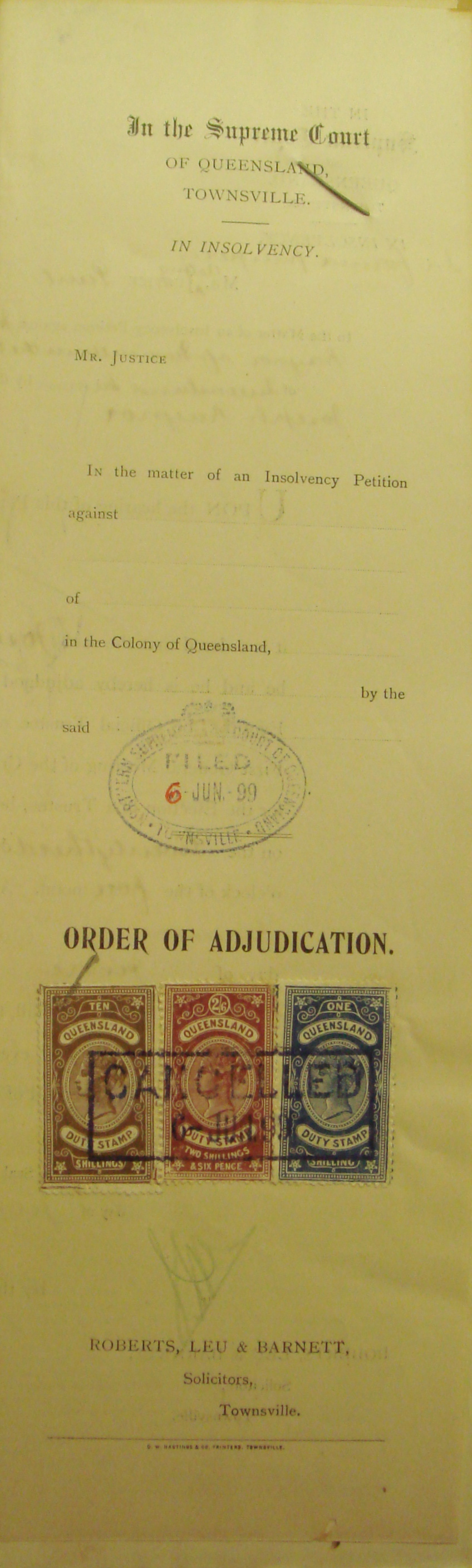
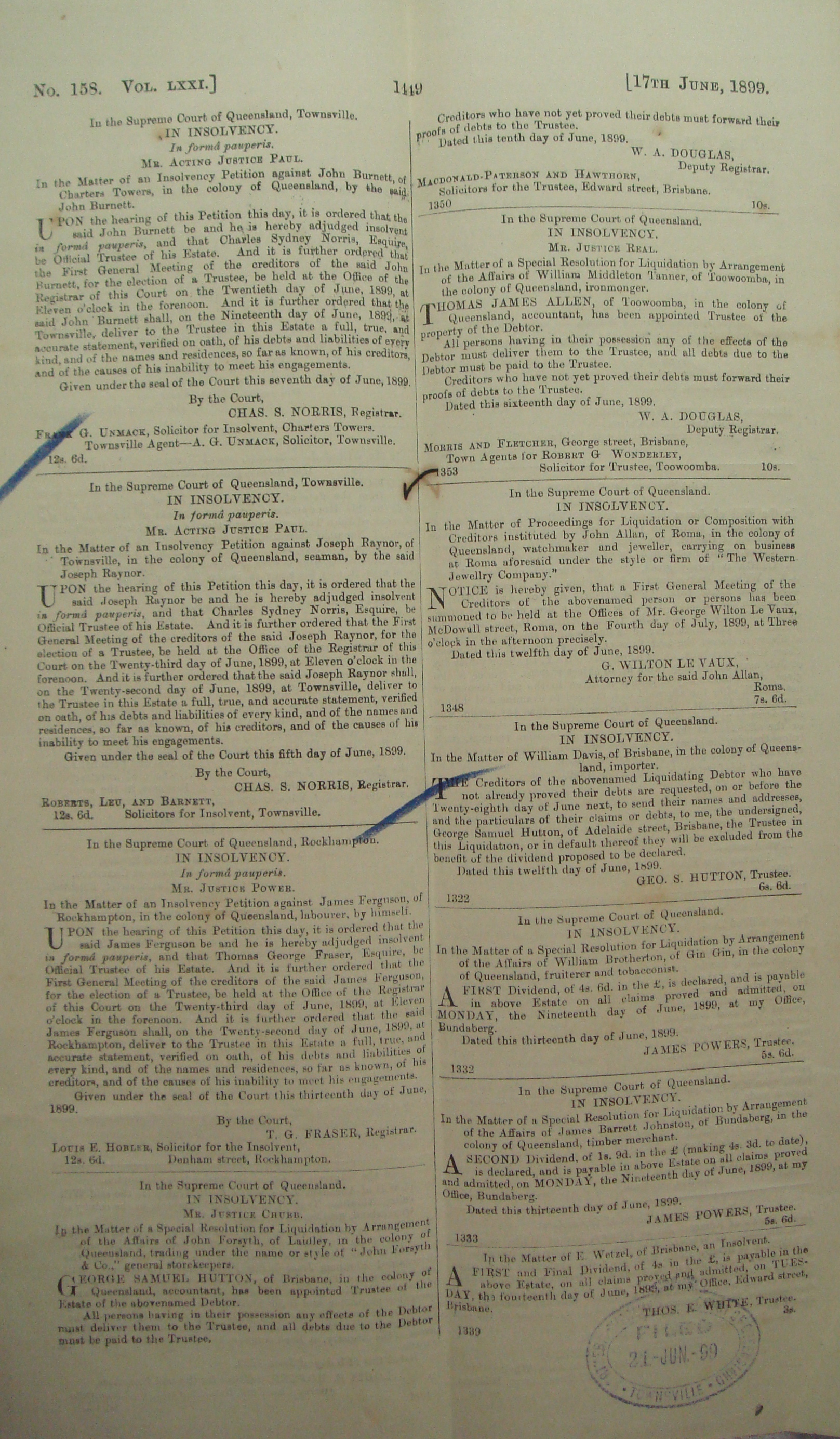
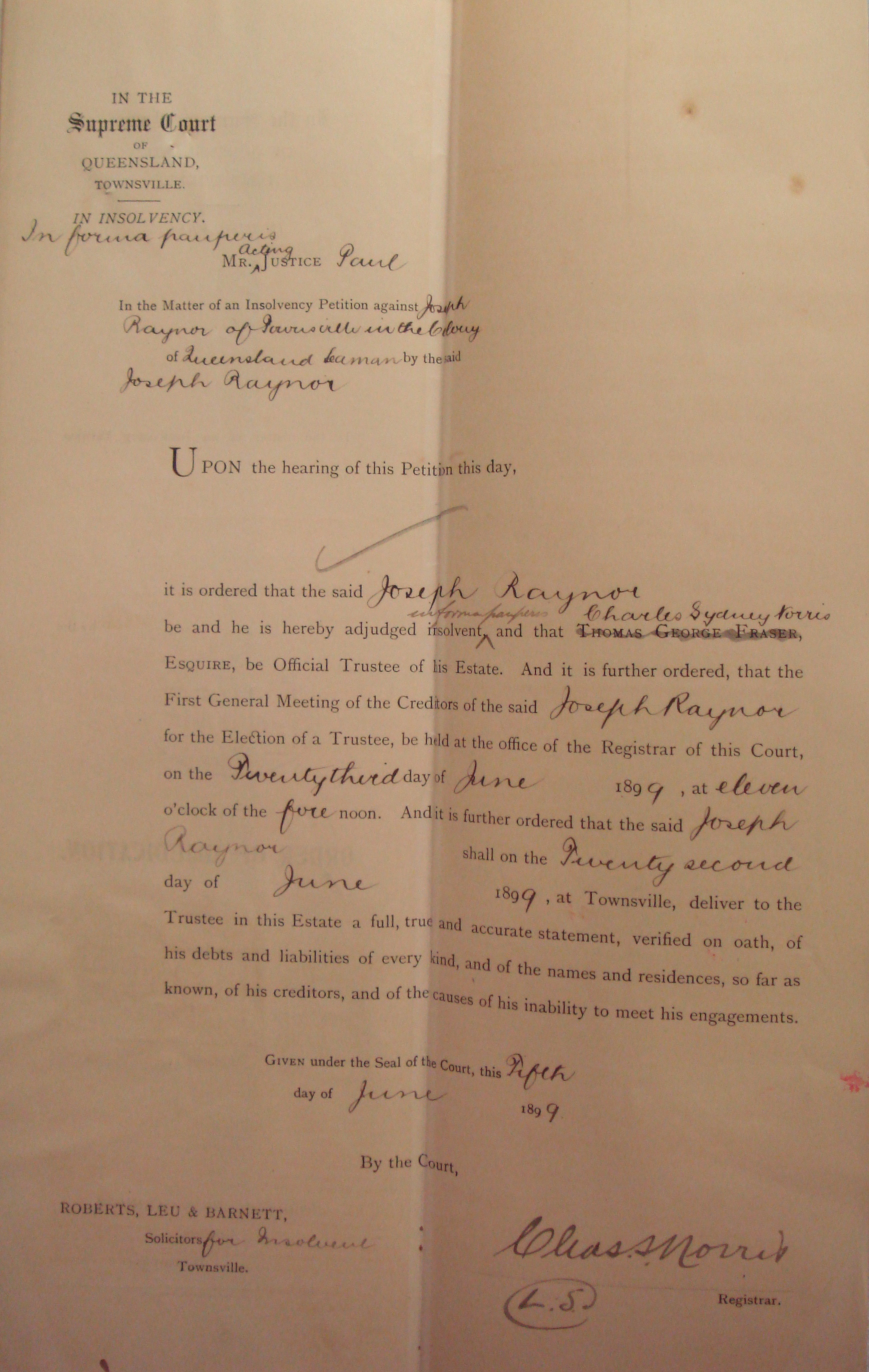
Joseph Raynor was declared bankrupt 17 June 1899.  I viewed Joseph’s insolvency file at QLD Archive, hoping to find clues to his earlier life, particularly in Sicily.  Unfortunately the Archives file didn’t reveal any new information, except that he was actually declared ‘informa pauperis’ which I assumes means he has no chance of repaying whatever debts he had.

I’m a bit perplexed on why the court would state he could not repay his debts, given he was probably by then already employed as a Seaman on SS Bobby Towns.

Nevertheless, this is the first record of Joseph’s life, therefore it was interesting to see, especially as Joseph signed one of the letters in the file.

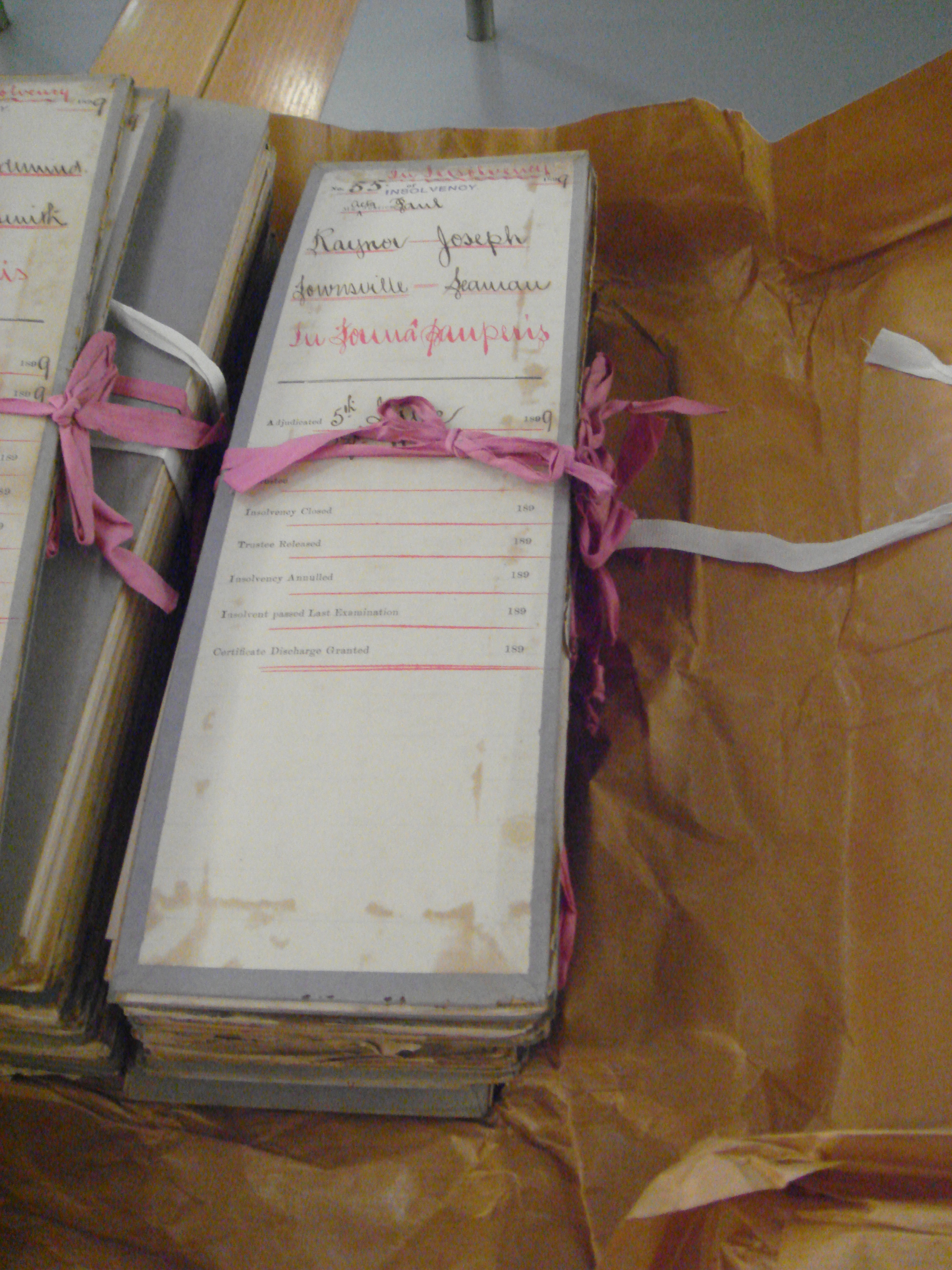
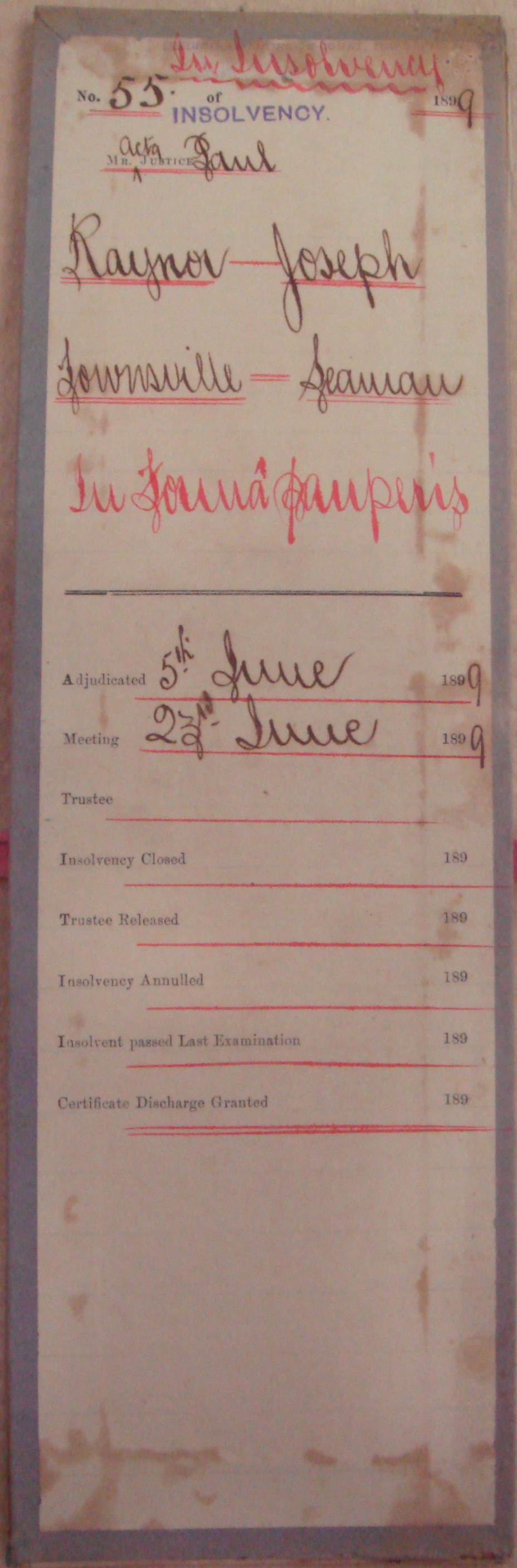
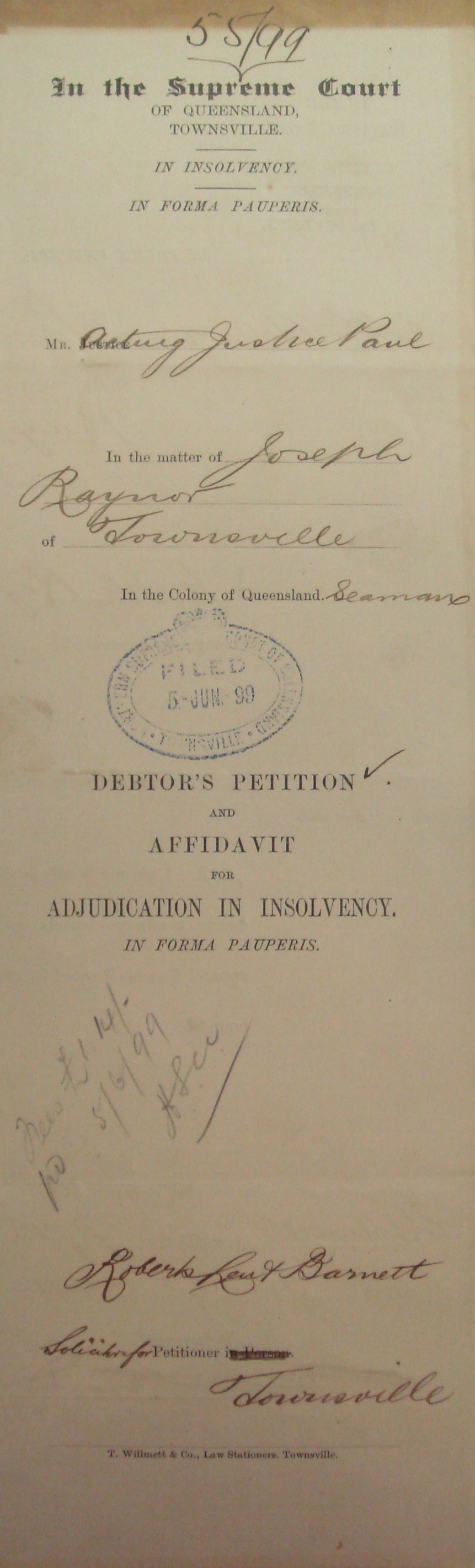
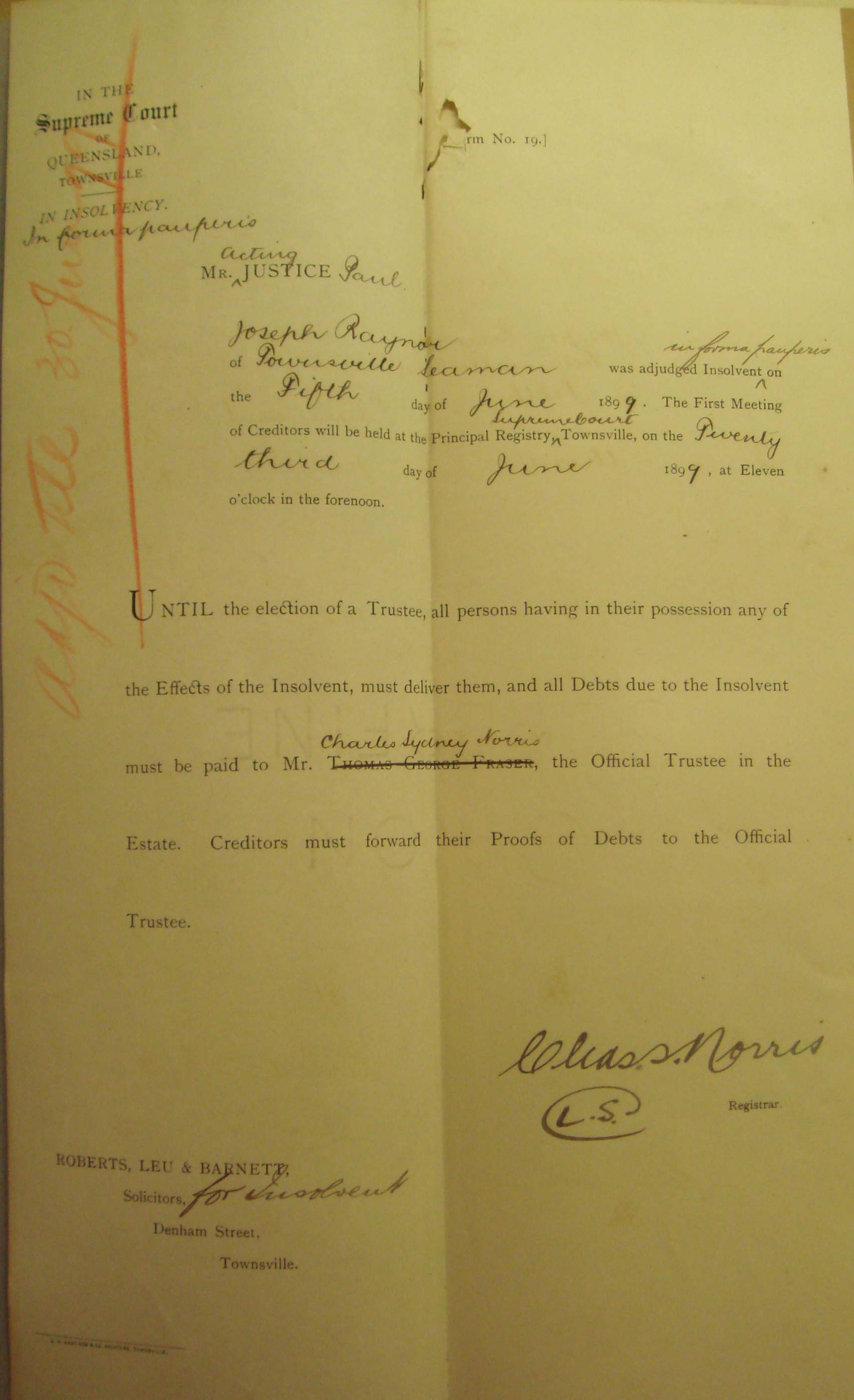
Below are the photos  I took of the file ( every page on the file is included below):

Bankruptcy file

Bankruptcy file cover

Affadavit 5 June 1899

Insolvency letter

Cover of insolvency notice

Gazettal notice of insolvency

Letter 23 June 1899

I’ve updated the post on Joseph Raynor’s will & other stuff

Just letting everyone know that over the weekend I updated the post relating to Joseph Raynor’s Will.  

I’m also reviewing the earlier posts – I wrote some of them in a rush and left out details that I could have included – including the few photos I have (Note I only have copies of copies – no originals, so unfortunately these are not the best quality).

I’m also working on the rest of the website – I’m going to try and put some links to the various geneology sites I’ve been looking at (once I work out how to insert links).


Back online

I’ve not done any posts for the last 12 months, as I temporarily stopped research on the family history.  I’m now finally able to get back into it.

At the time I stopped posting, I was researching three  issues:

(1)  Joseph Raynor – looking for clues on what Joseph might have been living and doing prior to getting his job on the SS Bobby Towns.  So I’ve been looking at the history of the SS Bobby Towns, the Seaman Union.

(2)  Joseph Raynor’s brother – there is a photo of Joseph Raynor and his brother – who was the brother?  Where was the photo taken?  It appears to be a professional photo, taken in a studio?  If so, it might be stored in Archives somewhere, and perhaps show the name of the brother?  So I’ve been looking on the internet on any information relating to Townsville photograph studios that operated in the early 1900s.

(3) Christopher Wilson – father of Abraham Wilson – when and where exactly did he die in Ireland?  It is known he died in a shipyard accident somewhere around Belfast.  If I can find the date of death, I might be able to get a copy of his death certificate.  Then we might have some information on Christopher’s birth, parents and further family ancestors.

I don’t have any answers on the above yet.

Joseph Raynor’s Will

Last year I was able to view Joseph Raynor’s Will, held at Queensland Archives.  All Wills can be accessed 75 years after the person’s death.  I was very excited to discover that his will was being held there, and especially that we could  actually get to see it!  What secrets will it reveal, did he leave any clues on his sicilian family?  One of the QLD Archive staff alerted us to the existence of wills held in QLD Archives, so the personal visit proved useful.   I had not anticipated that Joseph would have had a will – given he lived a very poor existence.   I had originally planned to just see Joseph’s bankruptcy file which I had found out was held in QLD archives via their online index databases.

Firstly the big moment – the QLD Archive staff retrieved the file and left it on a shelf for our collection and viewing.  Everything in QLD Archives is treated with extreme care, so as not to damage old documents.  We followed the instructions and carefully picked up Joseph’s estate file and took it to a desk for viewing.  I remember being very careful as I untied the ribbons holding the estate file together, I did not want to accidentally damage or lose any document in there.

The will file had a surprising amount of documents attached, so I decided I would take  photos of the entire file for later reading – given time was short and I may not have enough time to read everything in the file.

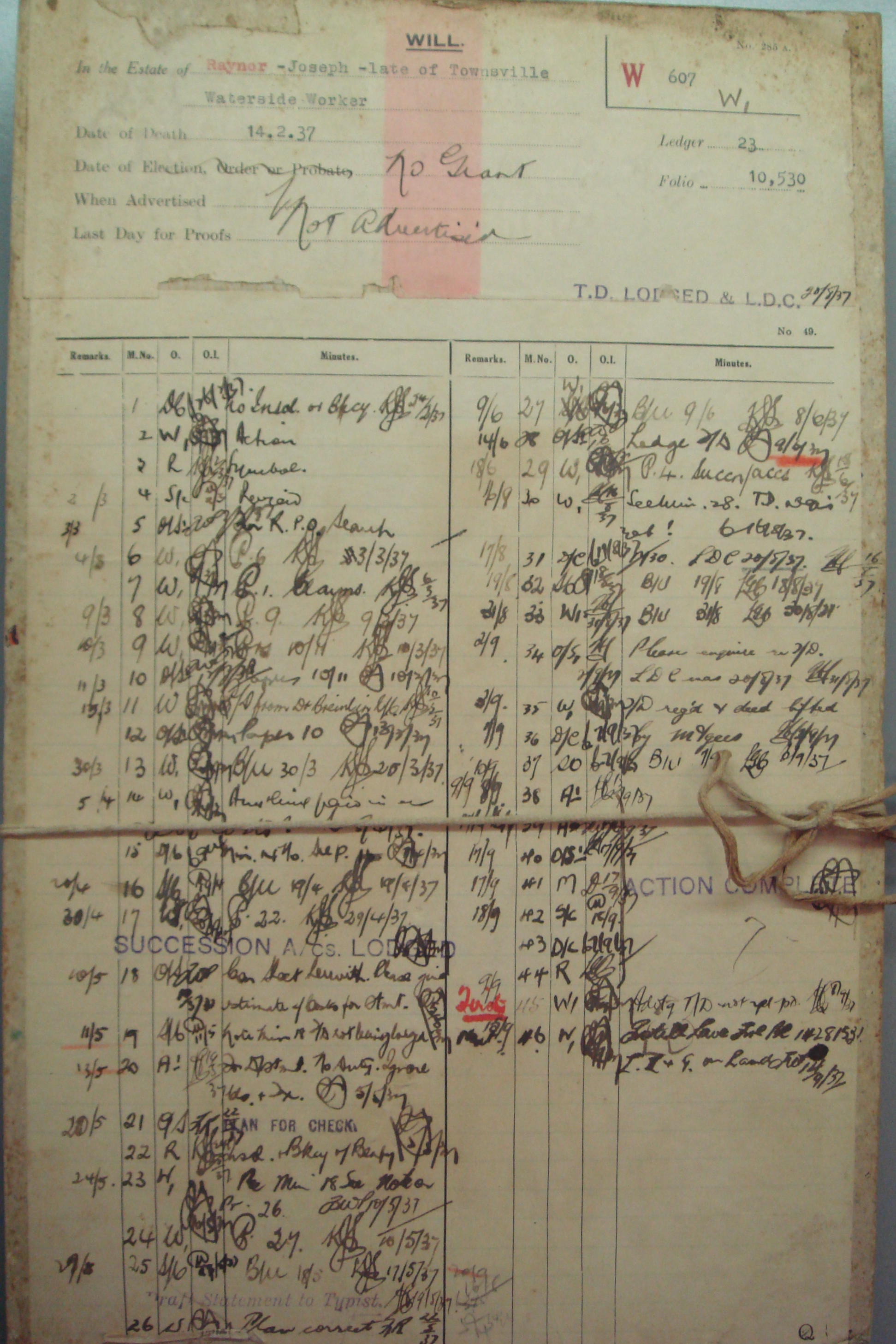
This was the cover document to the will.  I think it was a covering document to a number of other wills – but we only had Joseph’s file for viewing:

Will cover

So what was in the will file?

In rough date/interest order:

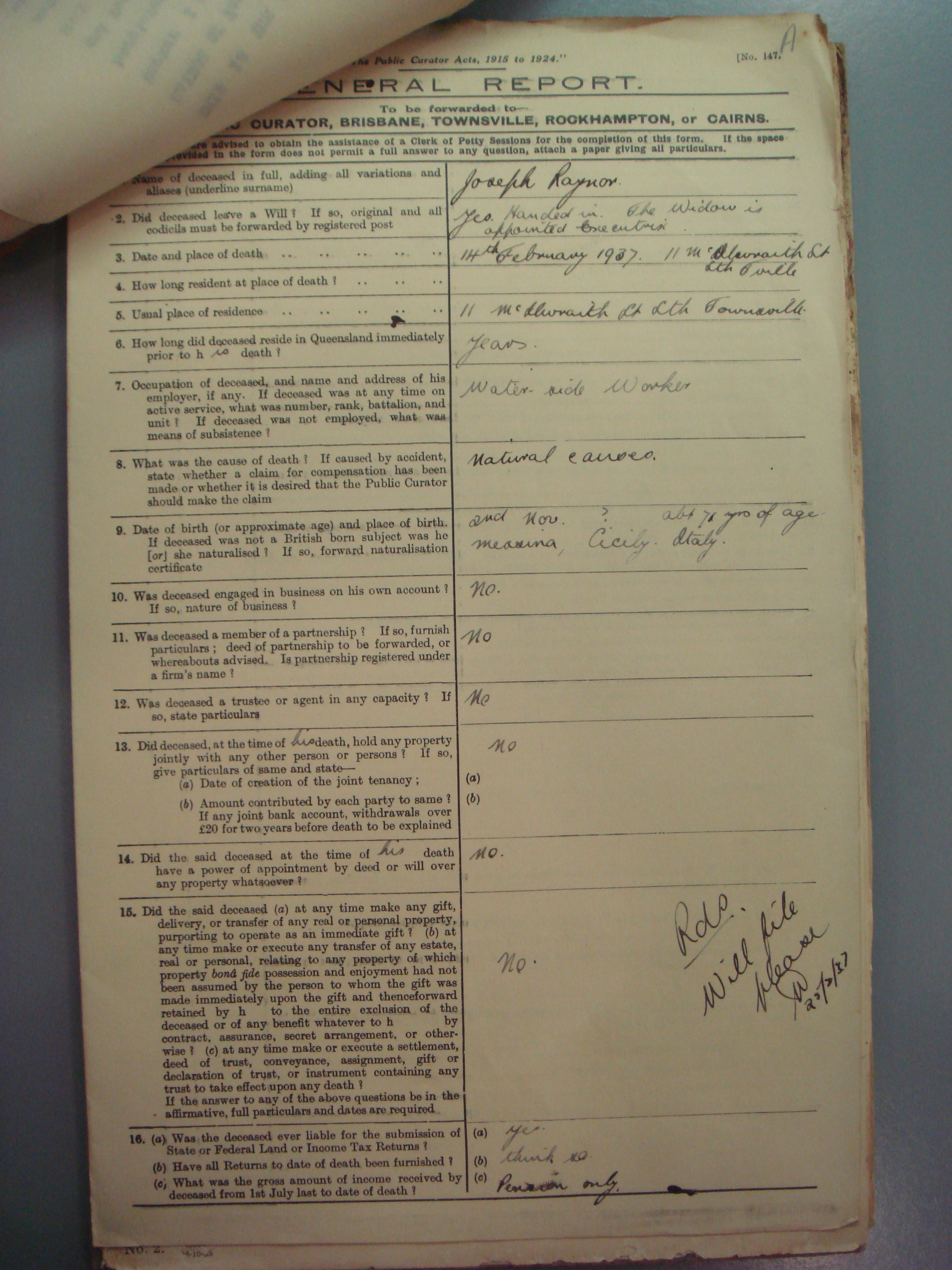
Mary Jane’s report of Joseph Raynor’s death on 14 February 1937:

Estate docs - report of death

I noted in the above Mary knew Joseph’s birthday – 2 November, but was unsure about the year of birth (marked with a question mark above).  Given Joseph’s age was listed as 71 years, this would mean his date of birth is actually 2 November 1865, not 1866 as is commonly stated in our family records (I will update my posts to reflect his).

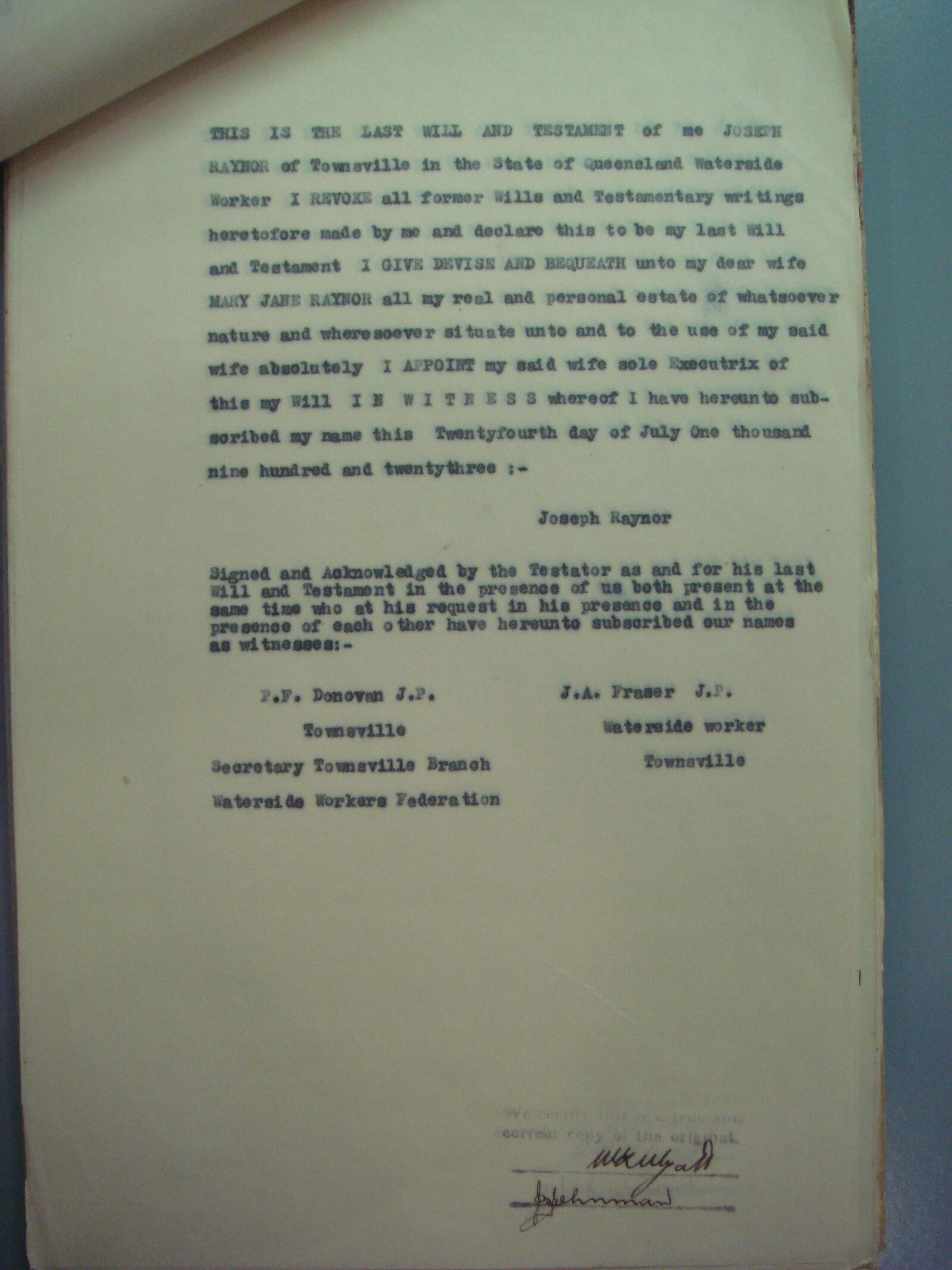
Joseph’s will dated 24 July 1923.  Interestingly the will held is not personally signed by Joseph, or the witnesses.  I had a thorough look for a signed will but this was the only copy of the will provided.

DSC02304


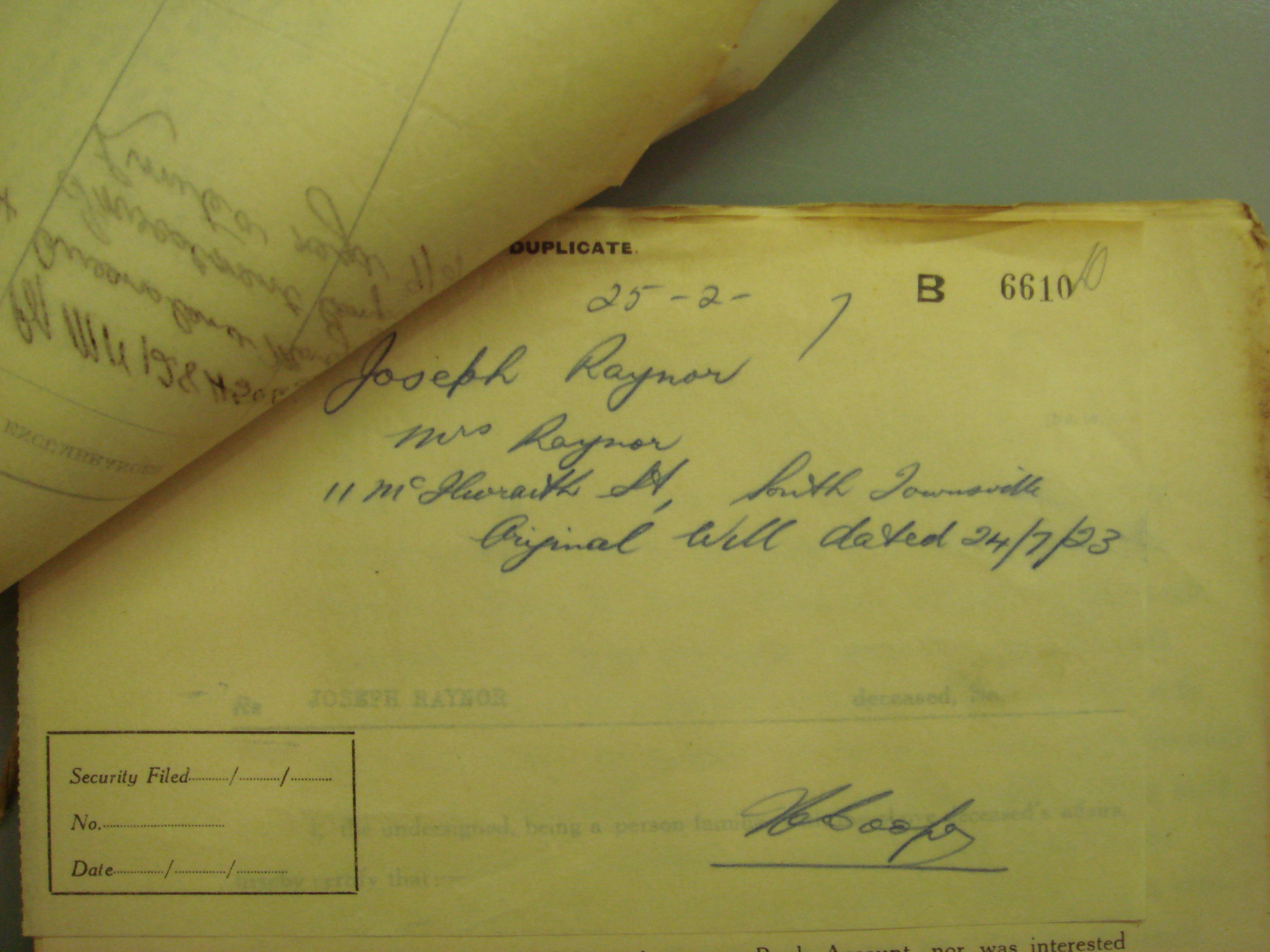
On 25 February 1937, 11 days after Joseph had passed away, Mary Jane visited the public curator and provided a copy of the will.  While Joseph died broke, he still had an estate to bequeath.  She could not afford a lawyer to handle the estate so she visited the public curator who discussed with her what needed to be done, and gave her a receipt for the will:

Estate docs - receipt of will

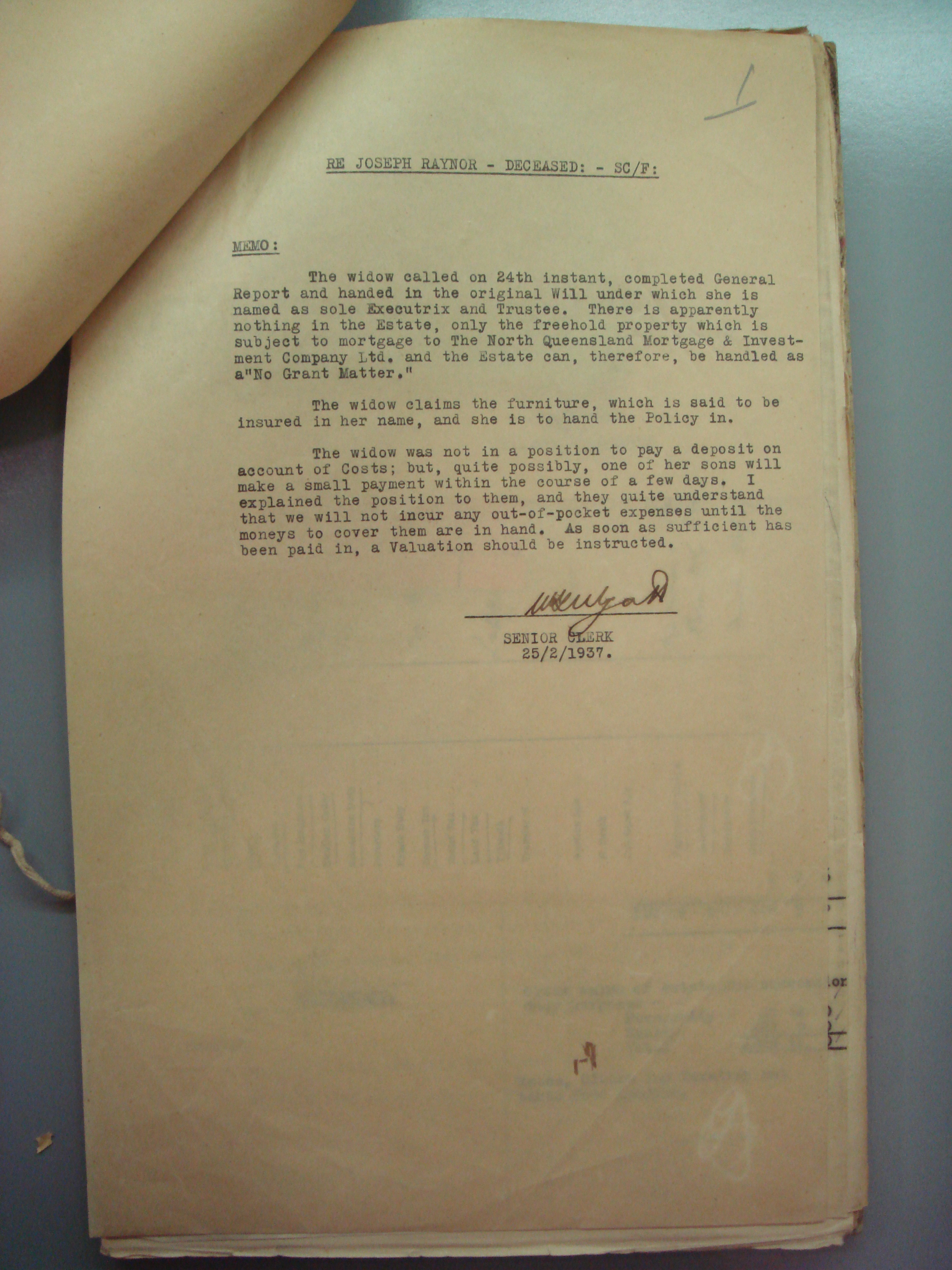
There was some discussion about the costs of the public curator – he would not proceed with the estate until Mary paid a deposit for the curator’s costs:

Folio 1

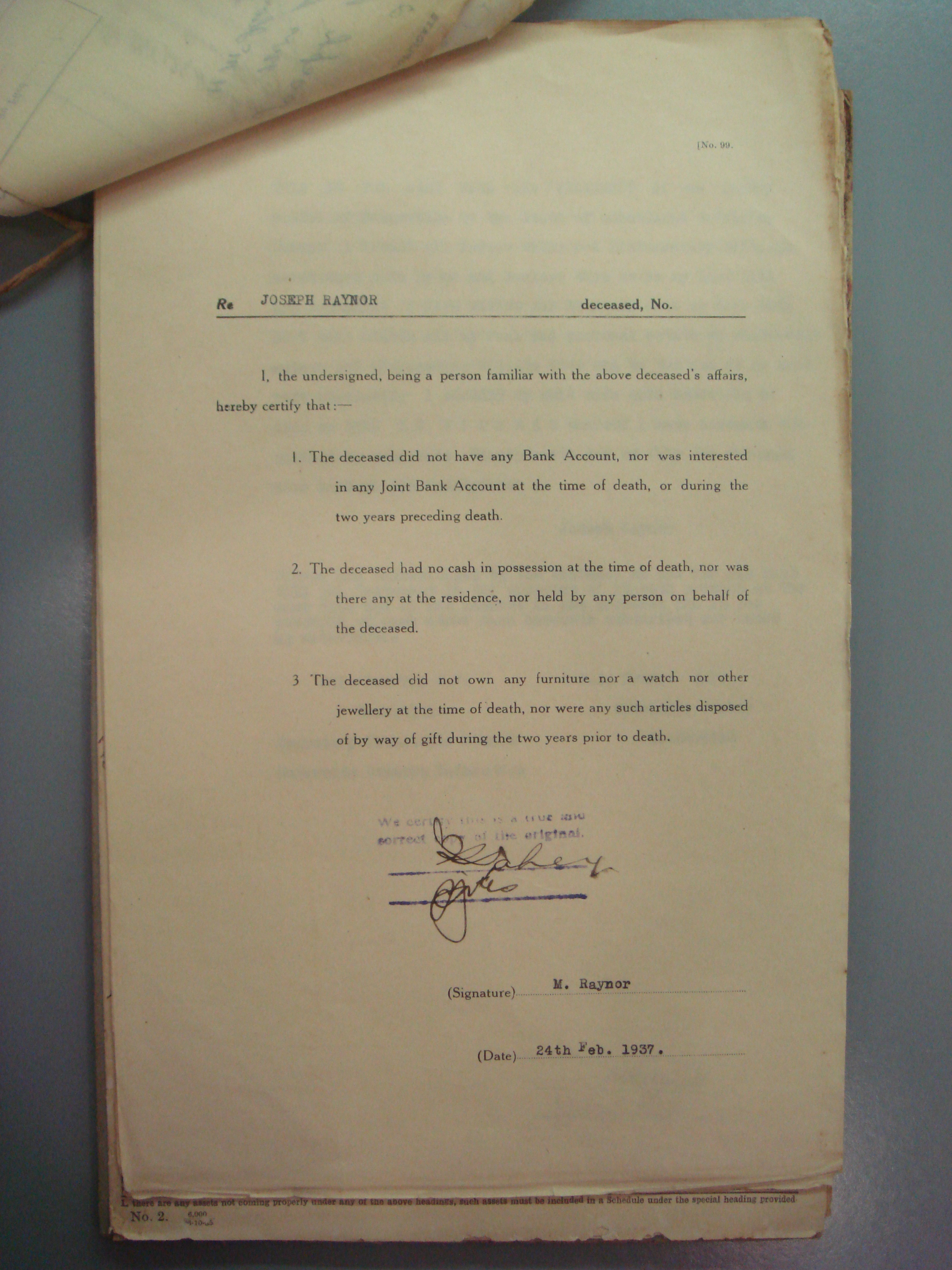
At the time Joseph died, he was as poor as the proverbial church mouse.  Mary made a declaration to this effect:

Estate docs - Mrs Raynor declaration

He had no bank account (always paid wages in cash and never made any savings), no jewellery (not even a watch!) and owned nothing other than the mortgage on his house (the property was in his name).

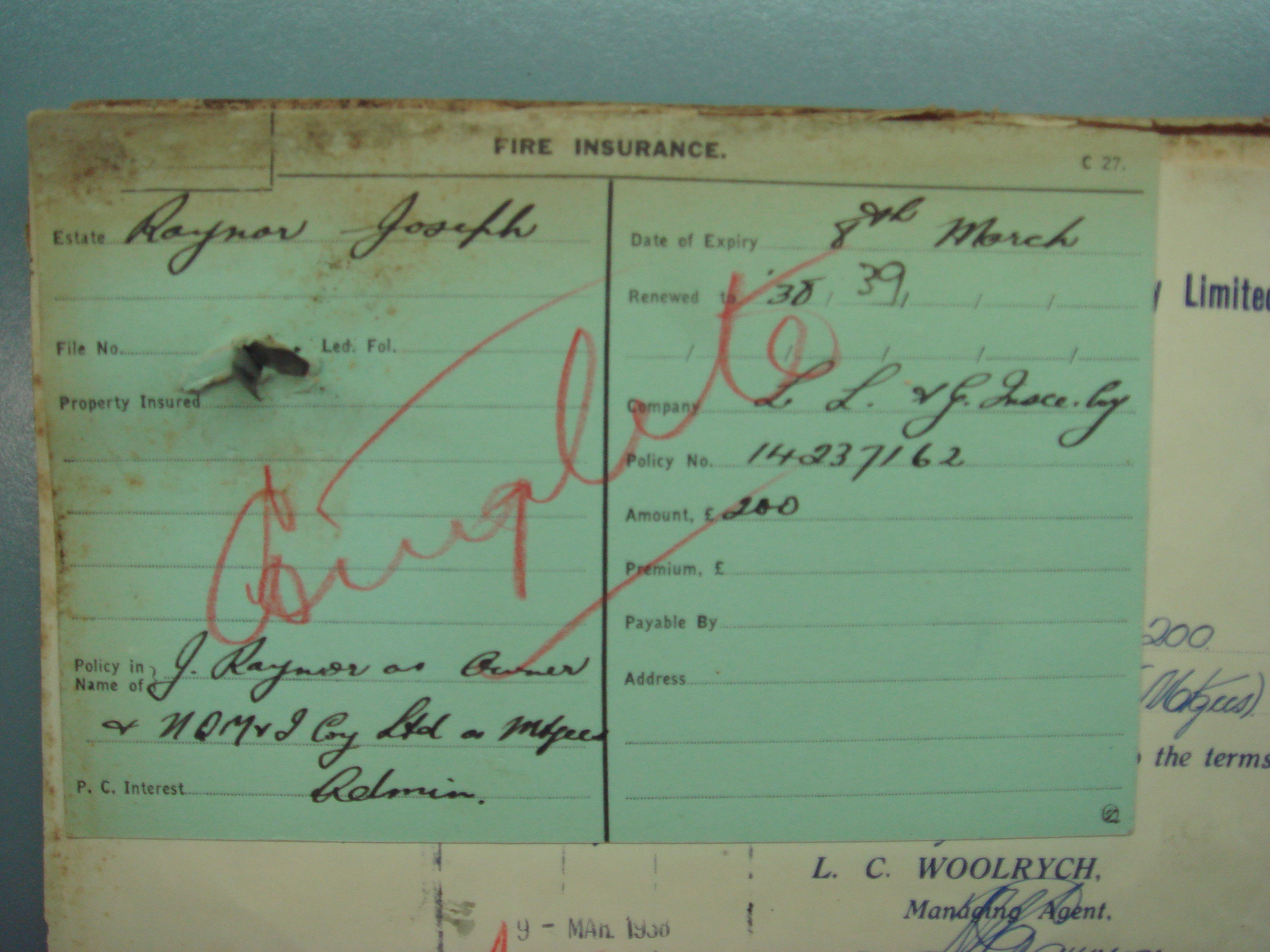
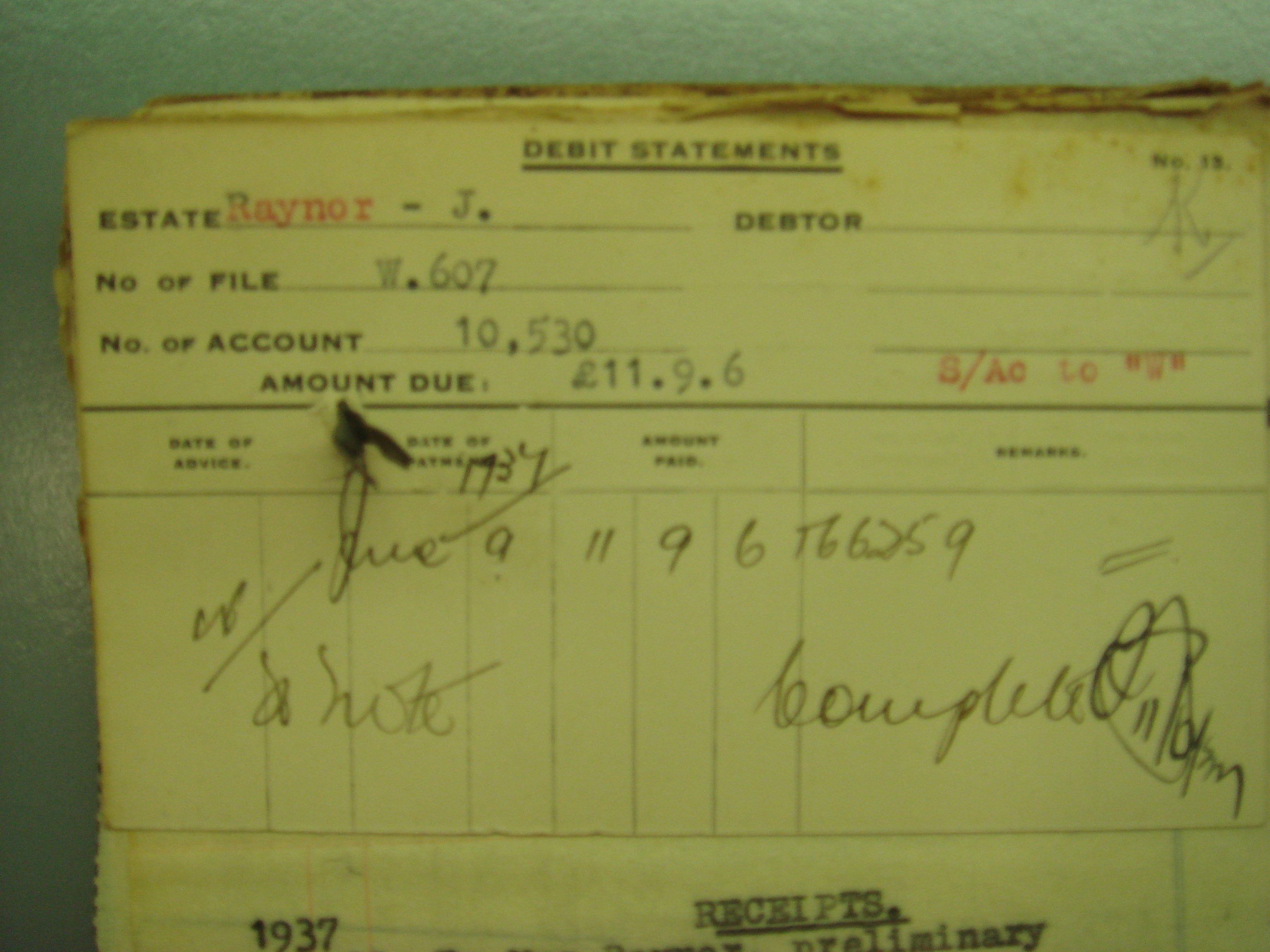
He also had some debts, mostly associated with overdue payments for the house – insurance, rates, and the mortgage payment:

Folio 10

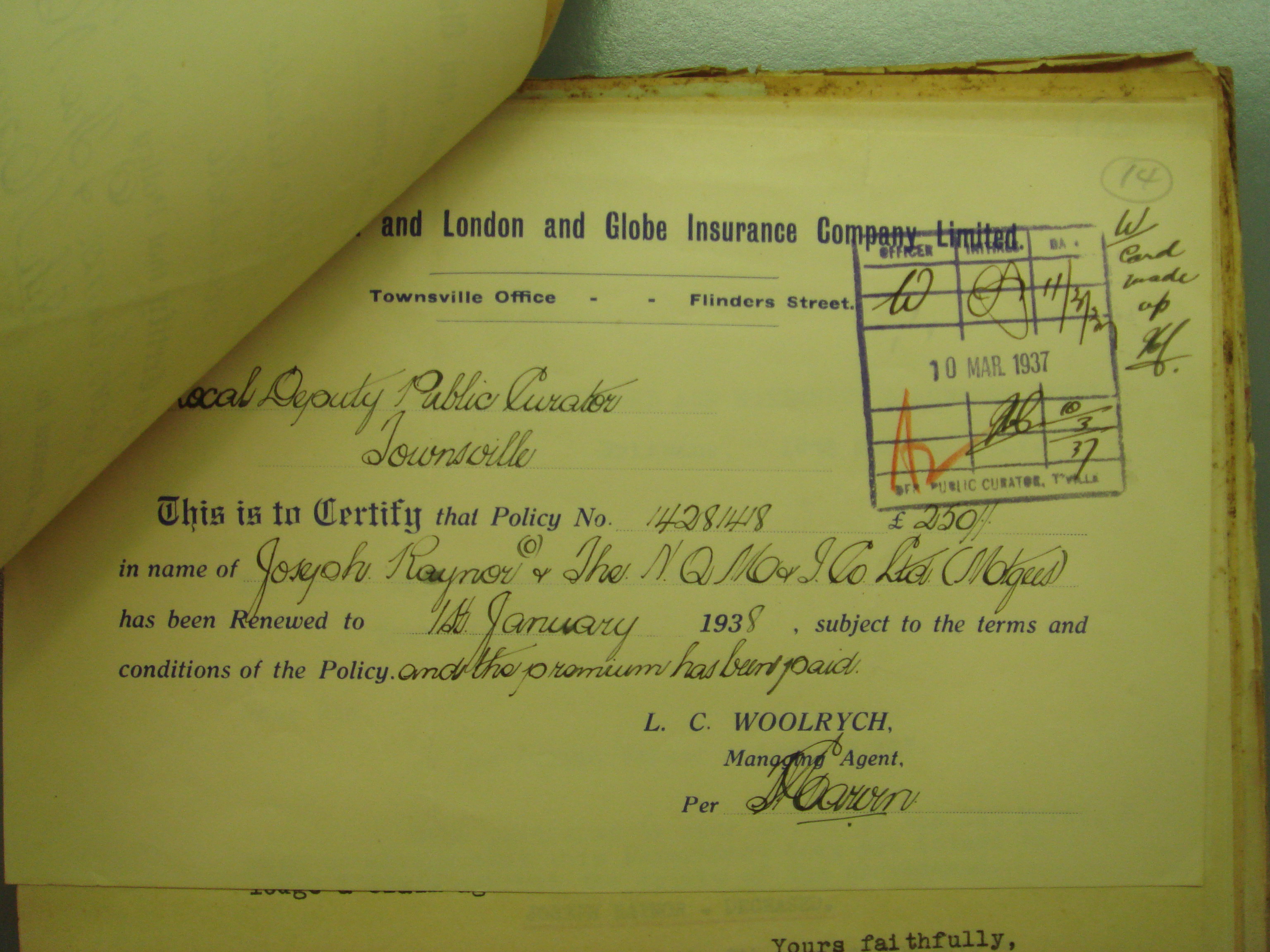
Estate docs - fire insurance

Estate docs - mortgage payment

Folio 14

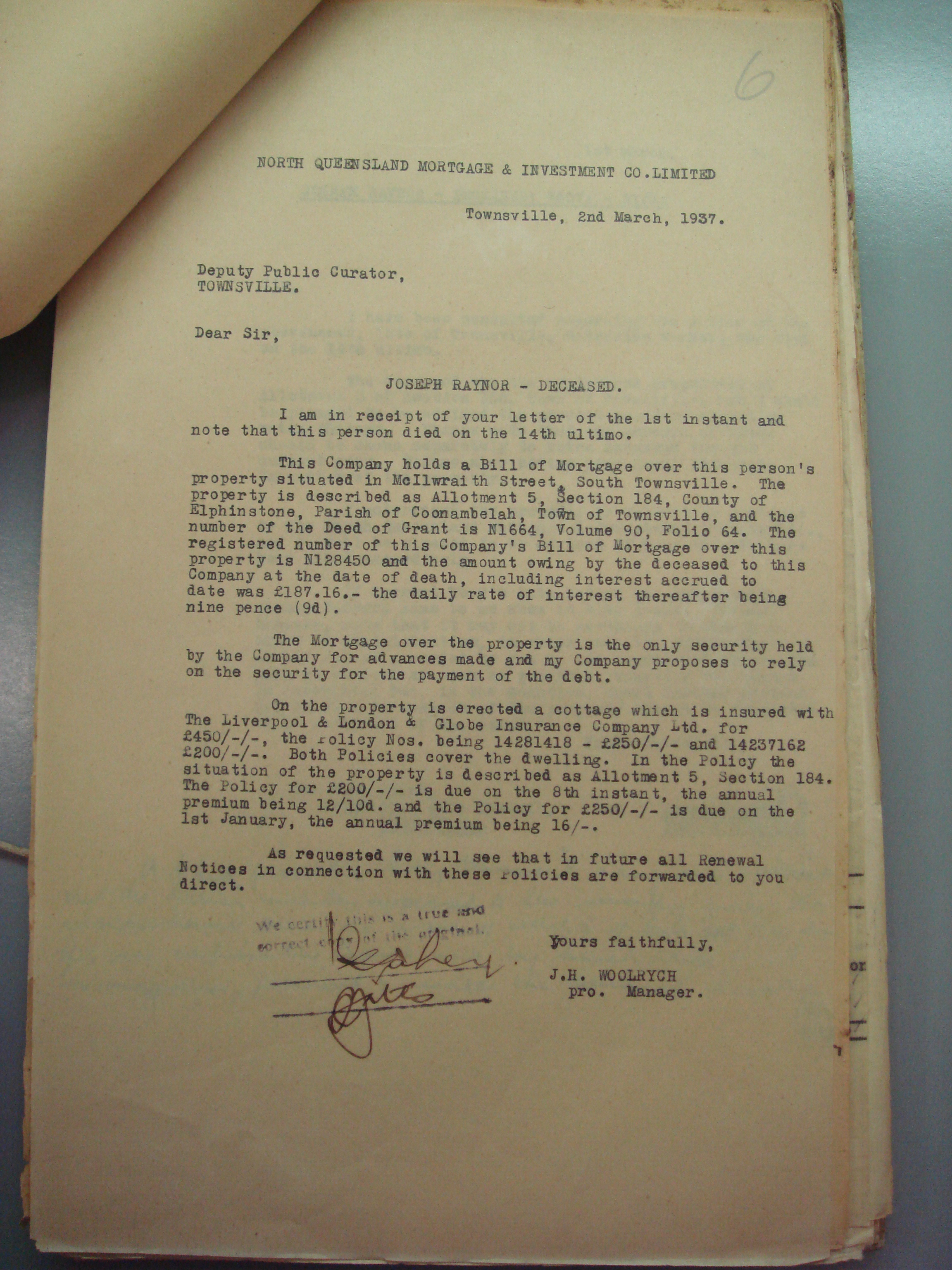
Below is a letter explaining insurance of the house – and the amounts outstanding:

Folio 6

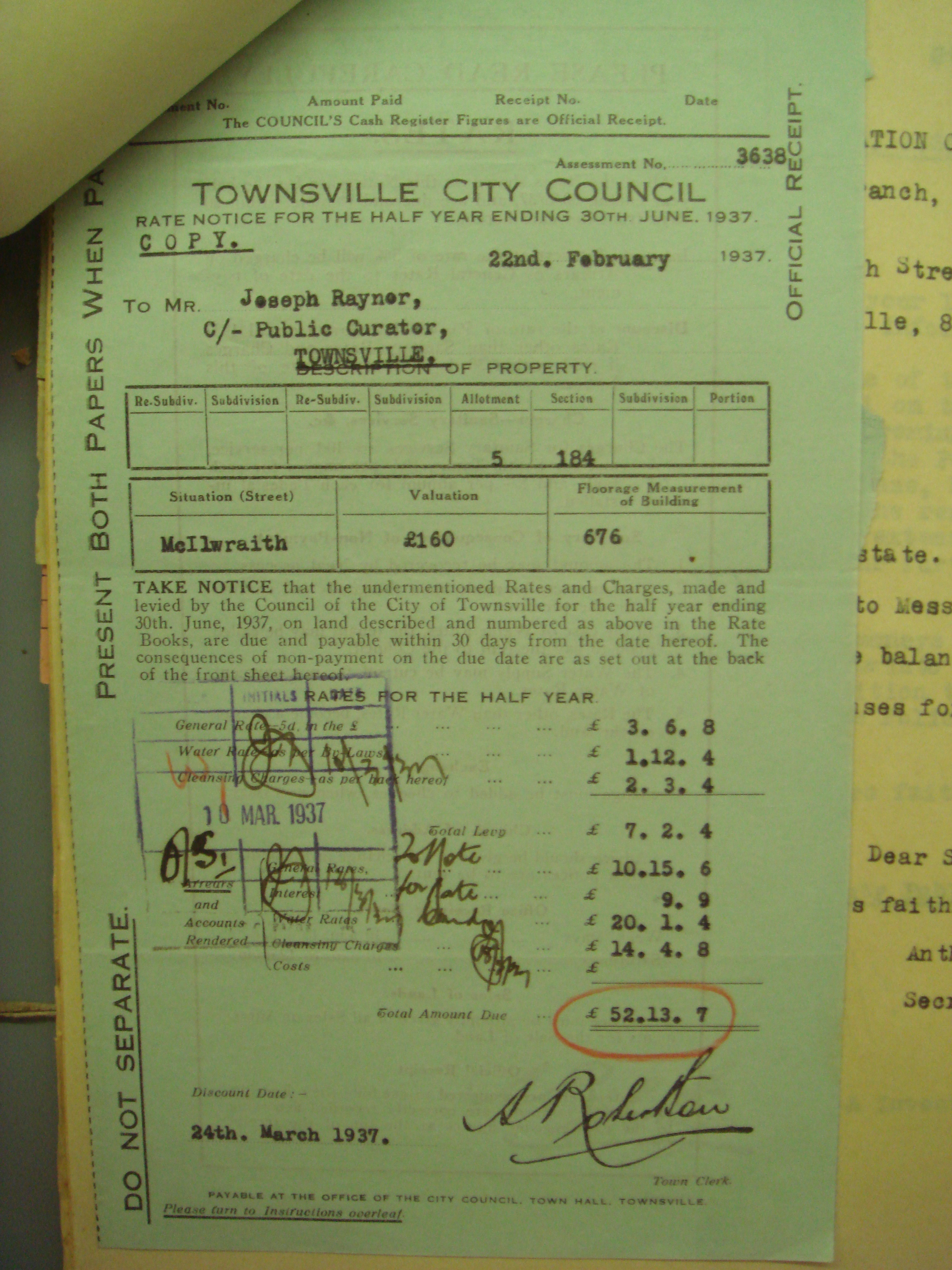
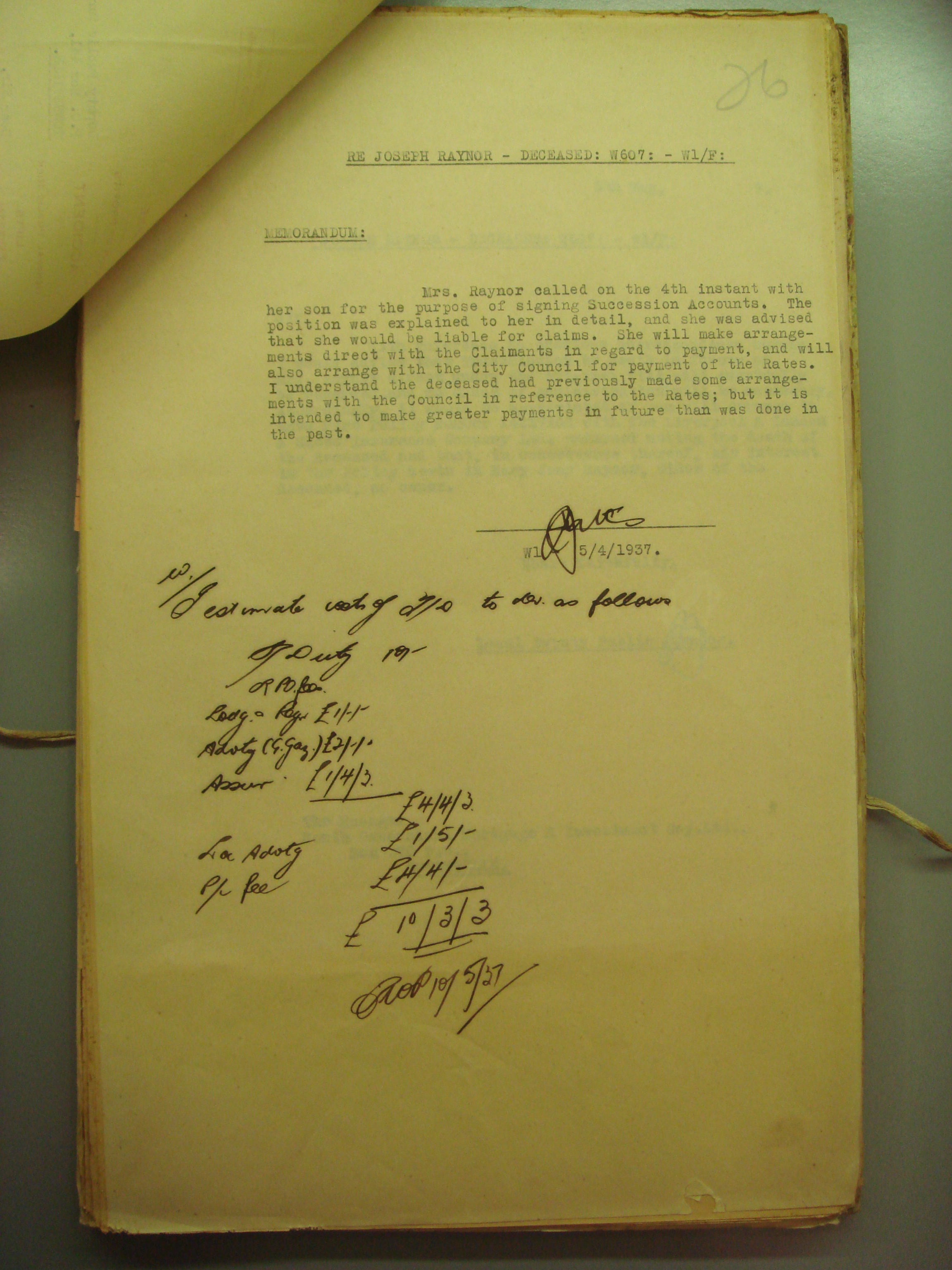
Joseph had not kept up payments on Council rates up to date, and the letter below states Mary agrees to pay more in future to keep rates up to date.   At the time of Joseph’s death he owed approximately 52 pounds – which was a lot of money in those days – so he was very behind in rates payments.

Folio 26

On the plus side, Joseph’s estate had a couple of small payments received:

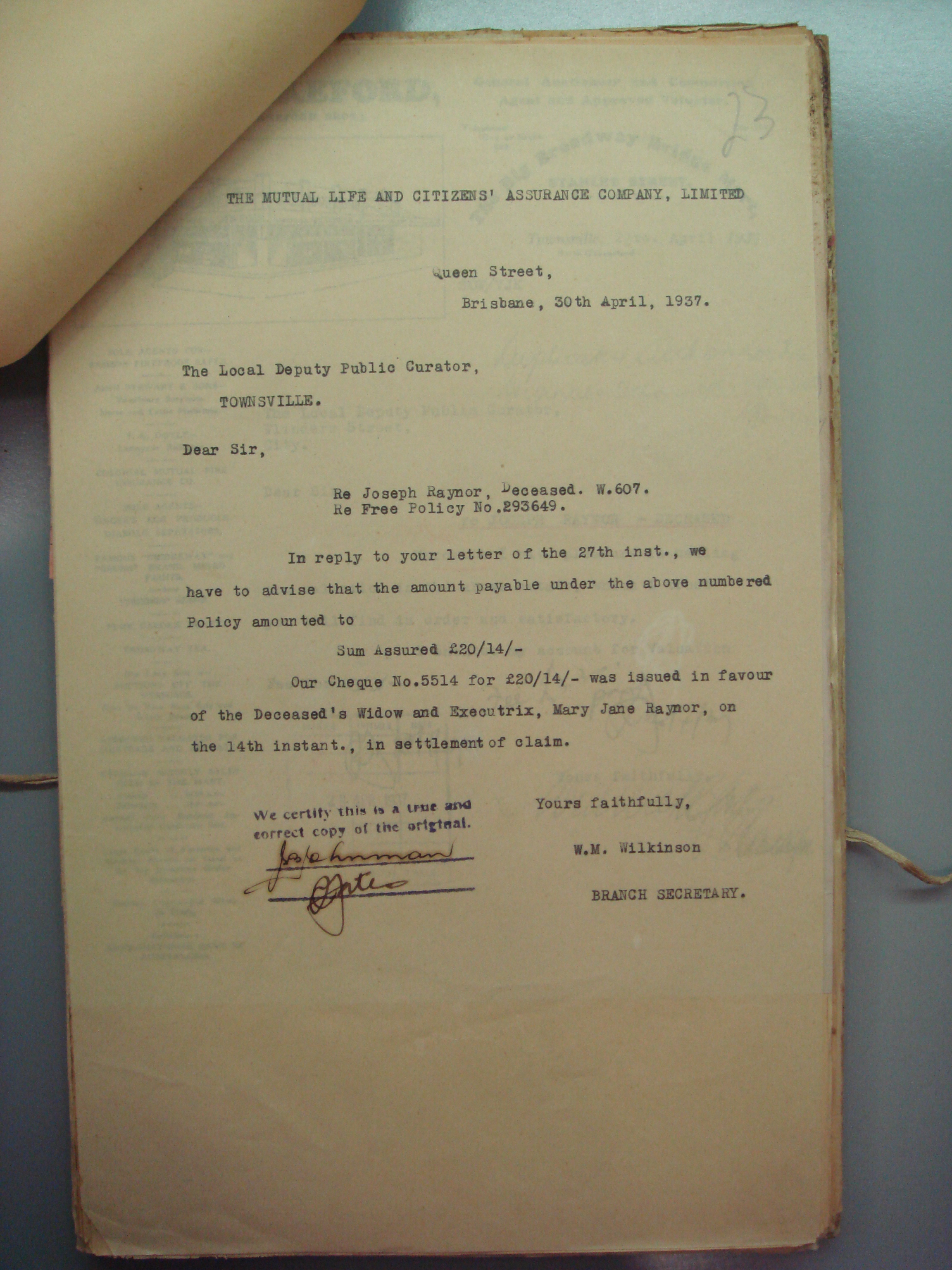
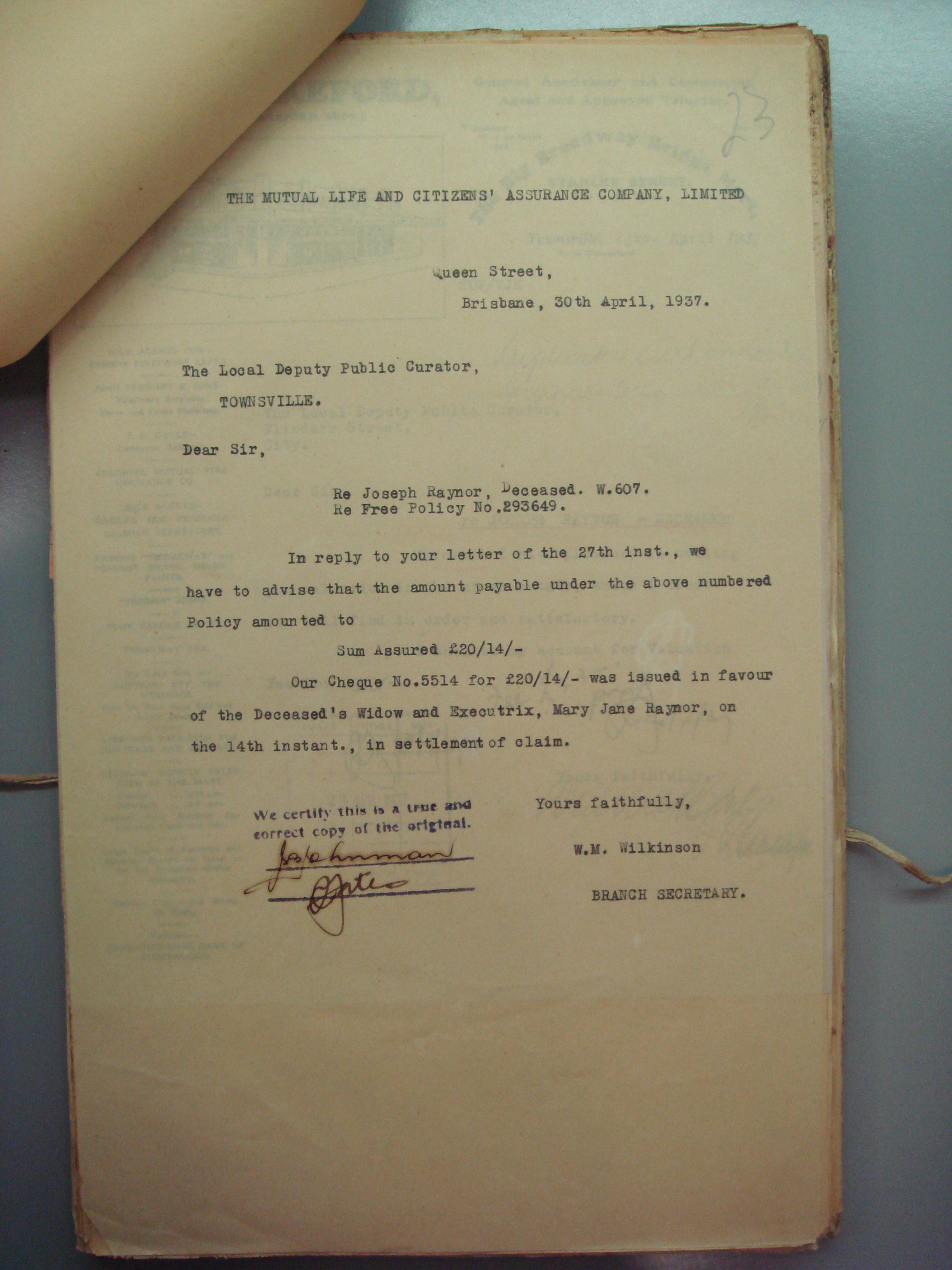
Folio 23

The above  is a life insurance payout of approximately 20 pounds.

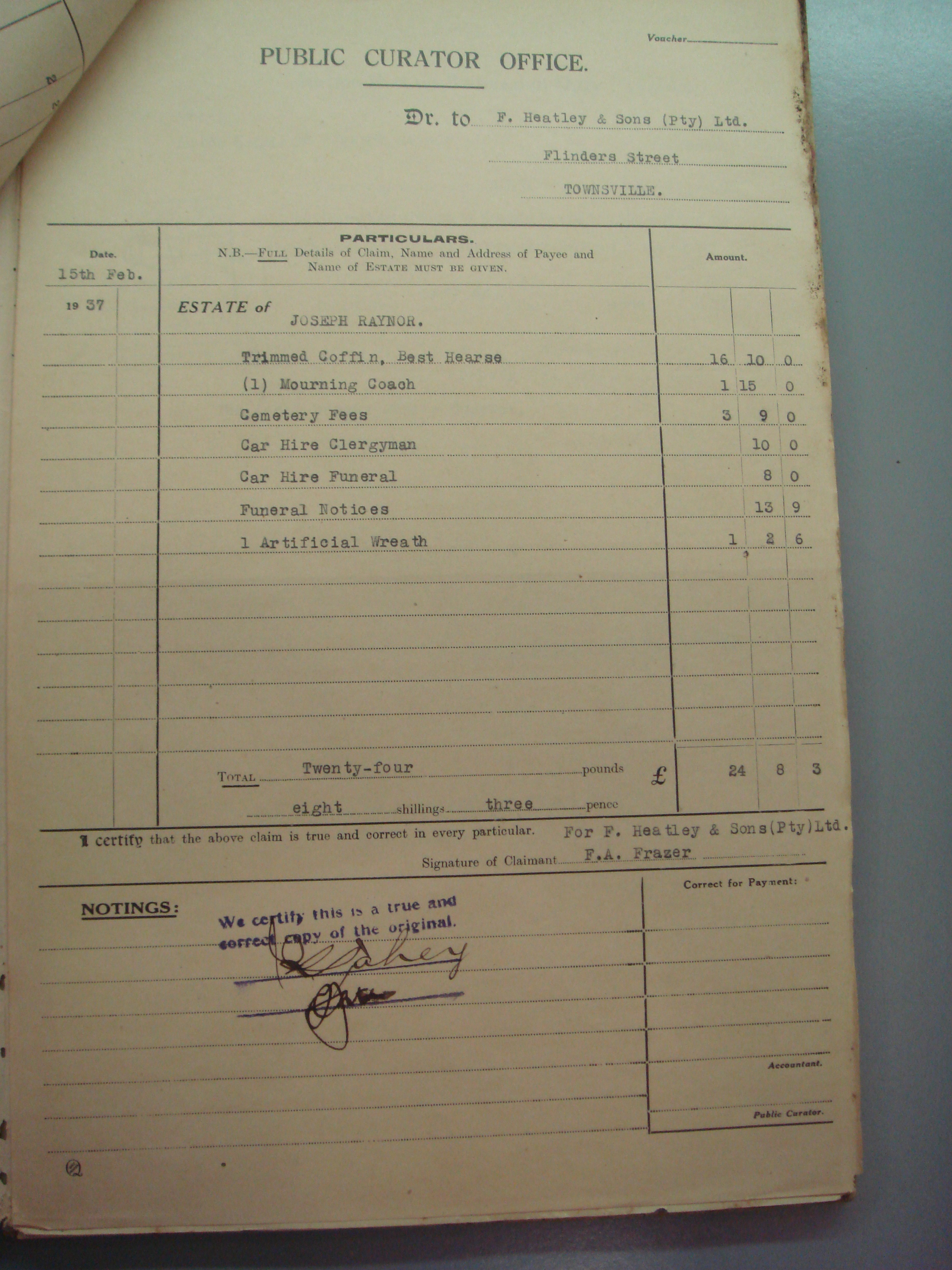
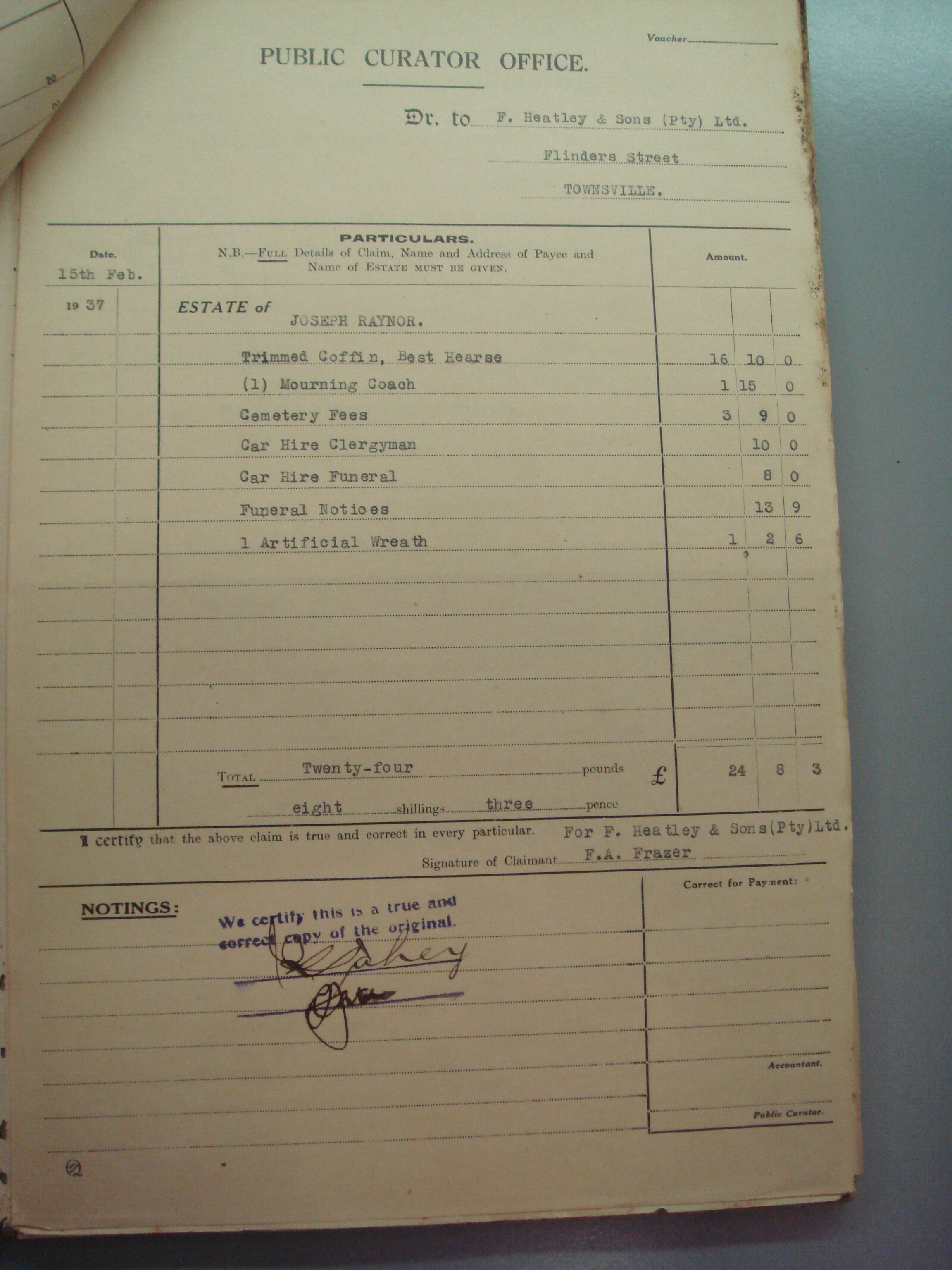
The Waterside Workers Union, who probably made Joseph take out the life insurance policy (if not his employers) also arranged Joseph’s Will and paid for his funeral.  Joseph’s estate was paid 27 pounds, of which 24 pounds was spent on the funeral:

Folio 23

Estate docs - funeral costs

Mary received the difference of funeral expenses versus Workers Waterside Federation payout for funeral (27 pounds for funeral, minus 24 pounds plus for funeral meant Mary received approx 2.5 pounds).

However Joseph also had a couple of creditors:

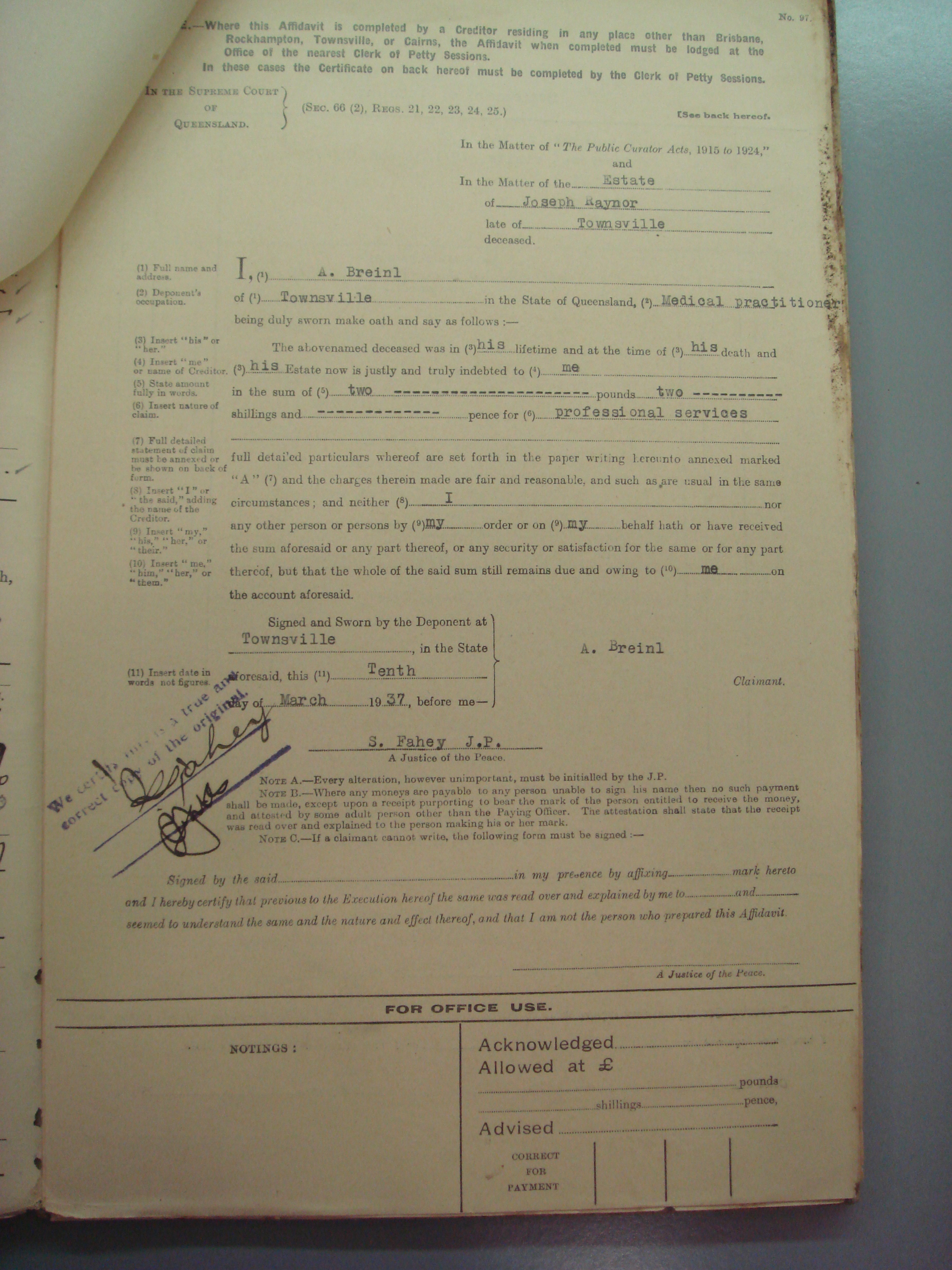
Estate docs - Dr A Breinl claim on the estate

The above was a claim by Dr A Breinl for medical treatment provided.  I am unsure if the medical was before Joseph’s death or perhaps a visit to the Raynor home to confirm Joseph had passed away.

The other creditor was funeral expenses – which was paid by the Waterside Workers Union (possibly the Curator paid the expenses, but the funds were provided by the Union).

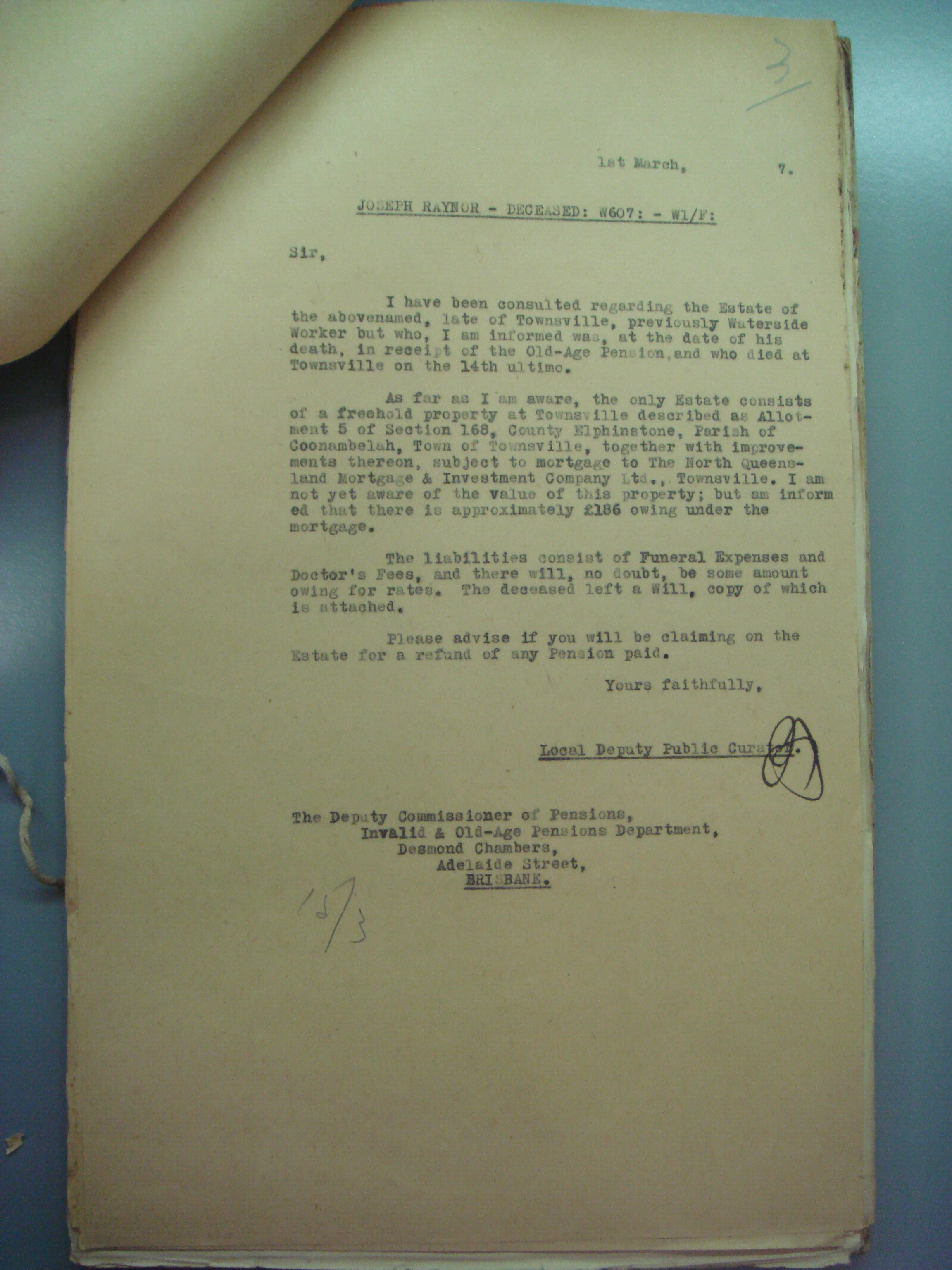
It appears Joseph might have  been sent an Aged pension cheque after his death.  The public curator wrote to the Aged pension office to ask if they intended to submit a claim on the estate for recovery of monies owing:

Folio 3

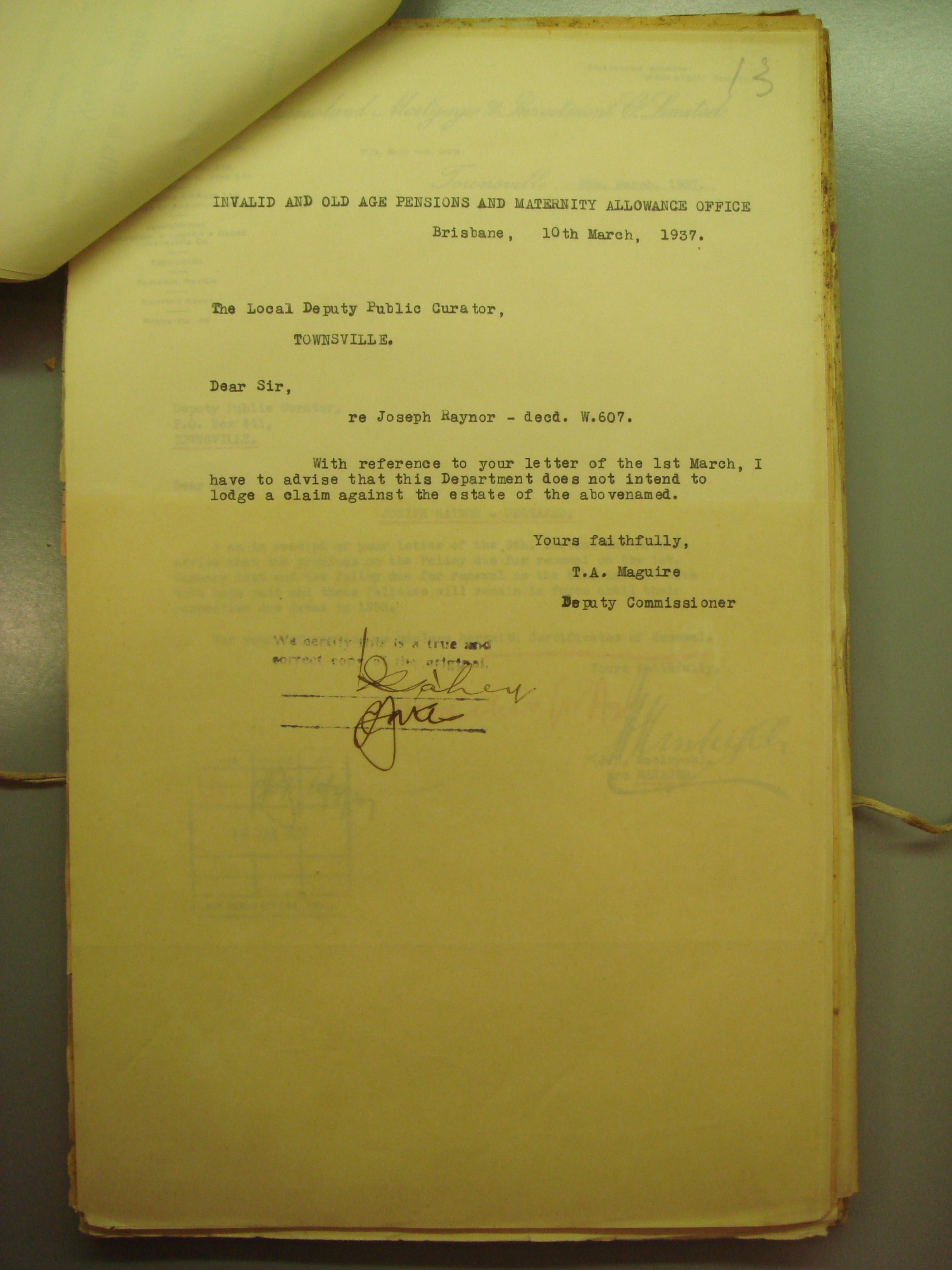
The Aged pension replied 10 March 1937 advising they would not lodge a claim:

Folio 13

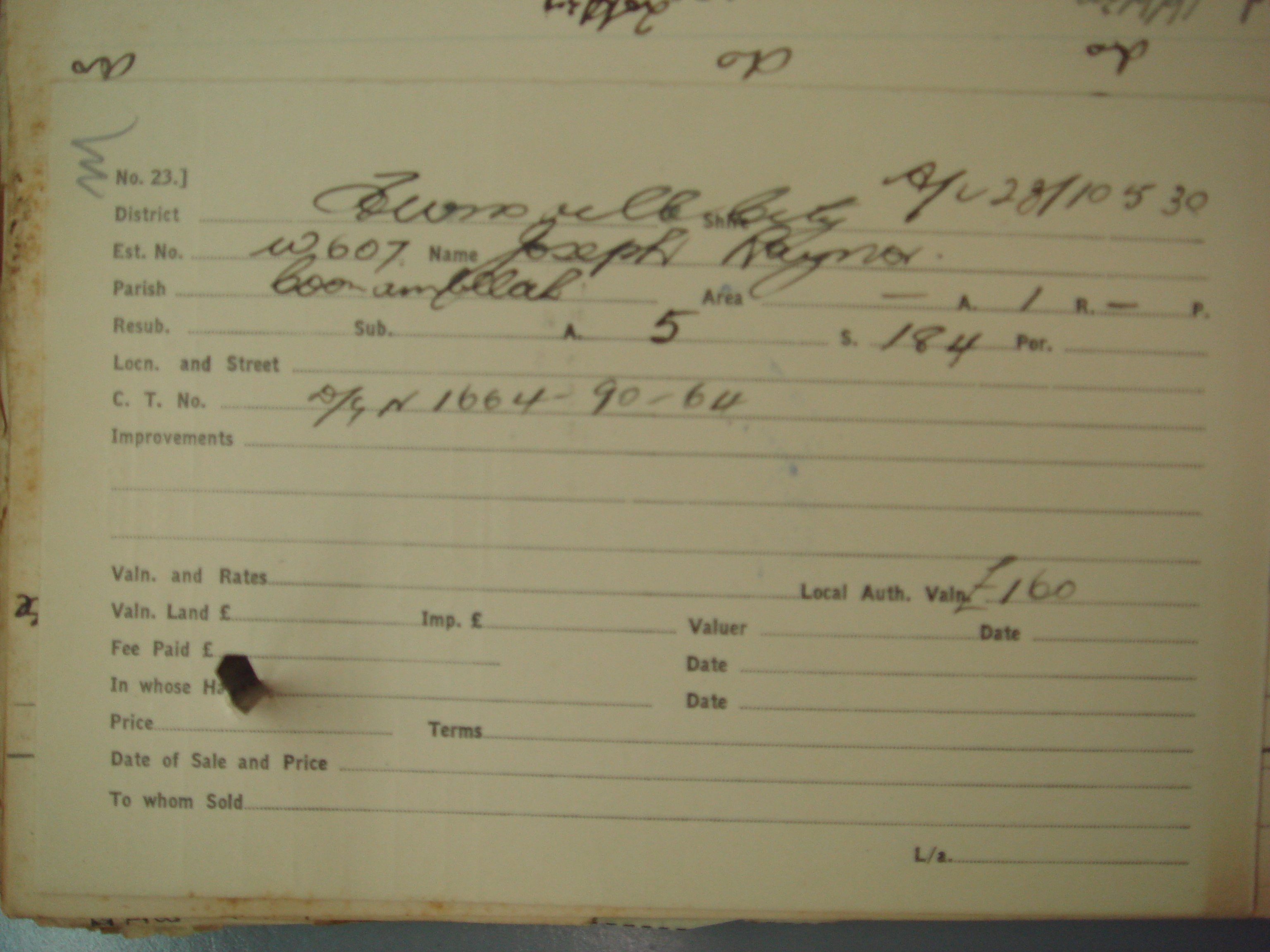
As Mary was the sole beneficiary of the estate, the home at 11 McIlwraith St would be transferred into her name.  This required a valuation which was arranged by the curator:

Estate docs - home valuation

The valuation fees (above)

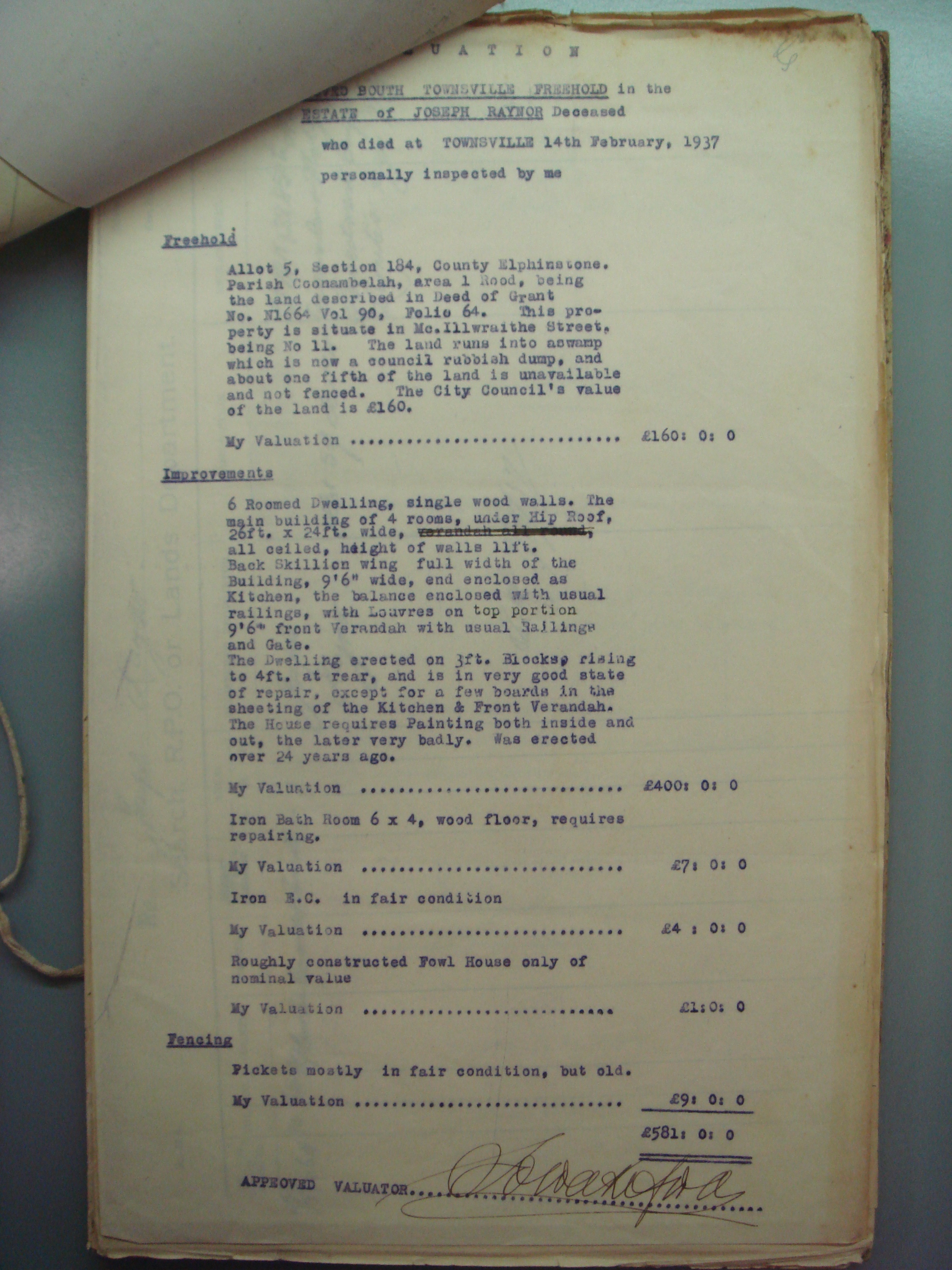
Estate docs - house & land valuation

So what was the property worth in 1937?

The land valuation was the same as the Townsville City Council valuation – 160 pounds.

The house itself was described as being built 24 years earlier (1913?), and was a 6 room dwelling with single wood walls.  The house was considered in good condition but badly in need of a paint, inside and outside.  There were also some minor repairs needed in the bathroom.  And the picket fence was described as being in fair condition, but old.  The overall valuation of the house was 460 pounds.

Together with the land, the total value of the property was 580 pounds.

And a ‘roughly constructed Fowl House’ was given a nominal valuation of 1 (one) pound.

(Dad was sitting with me viewing the document said, ‘yep I remember the chook shed’.  He was less than a year old at the time of Joseph’s death)

The Public curator kept records of all the estate expenses:

Estate documents file

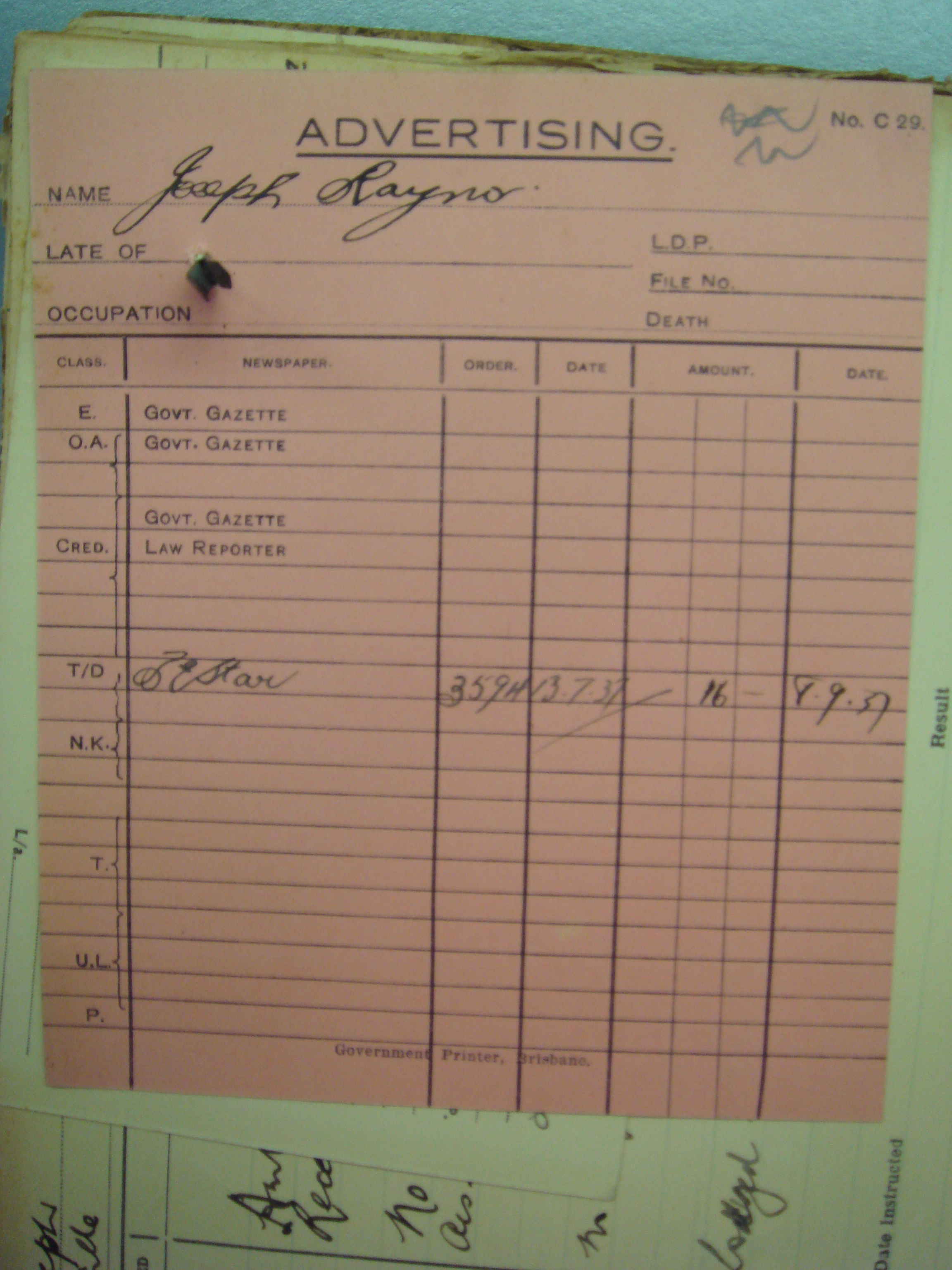
Including the funeral and advertising costs:

Estate docs - funeral costs

Estate docs - advertising costs

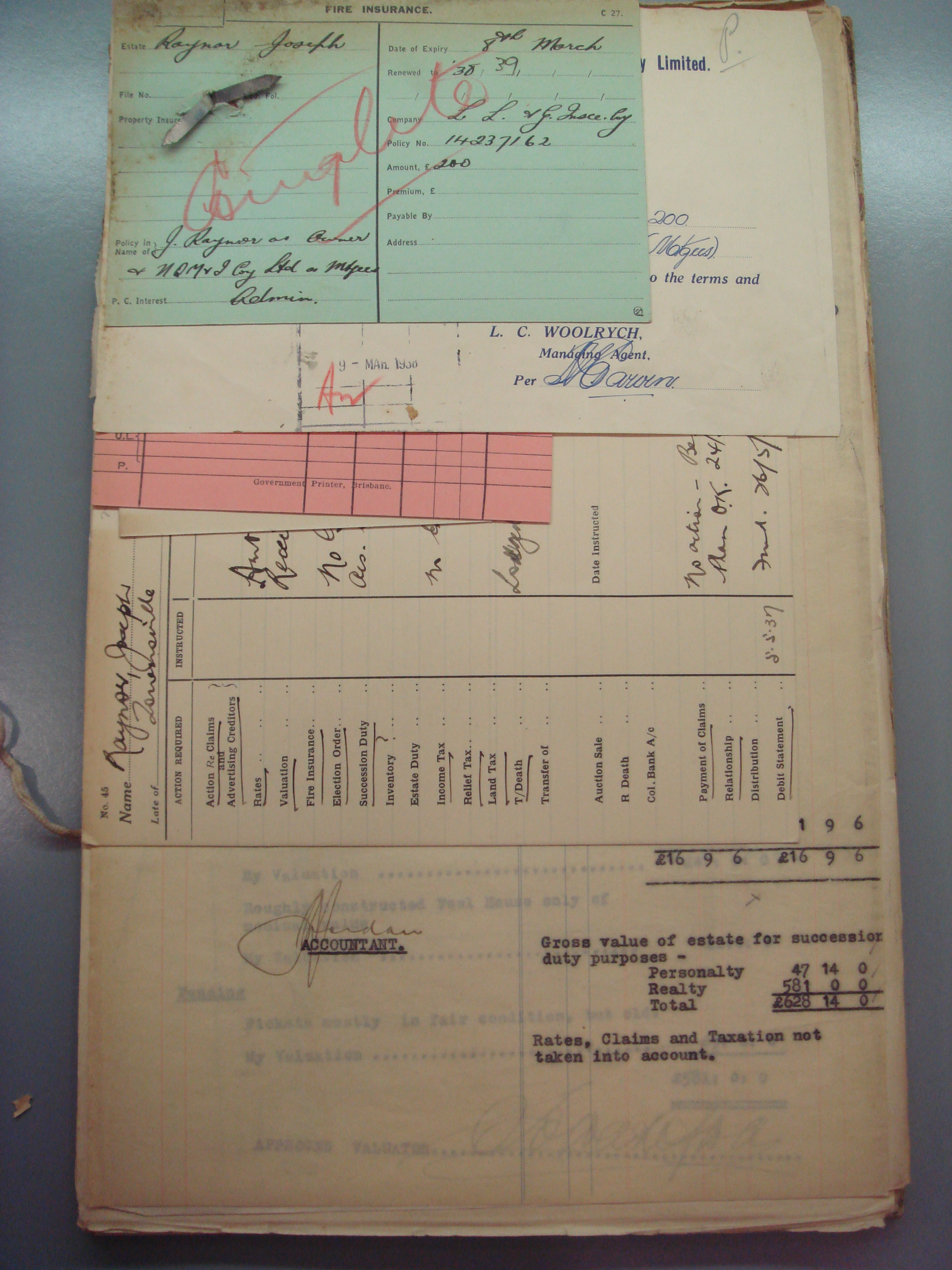
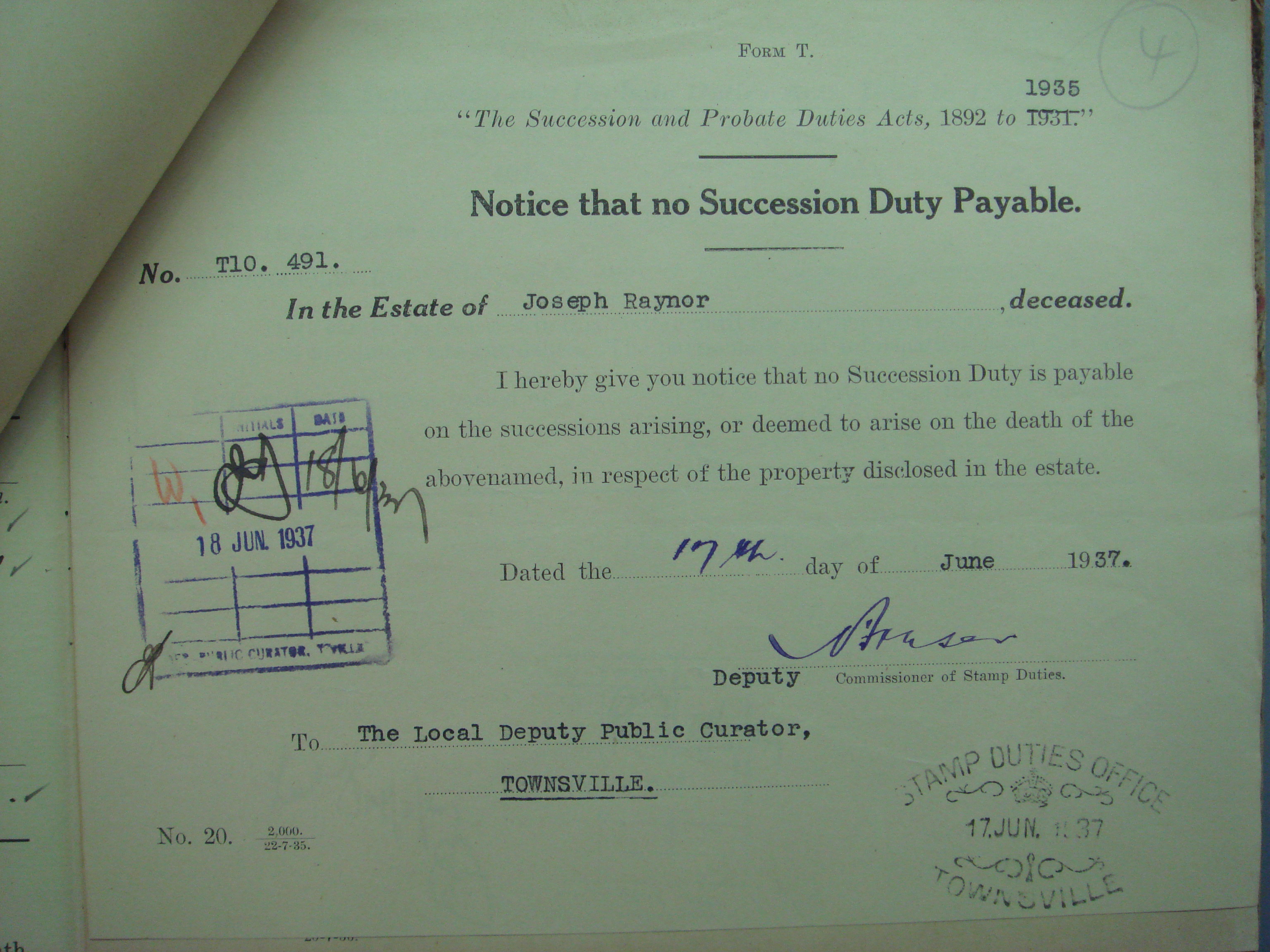
Succession duty was not charged to the estate:

Estate docs - succession duty not payable

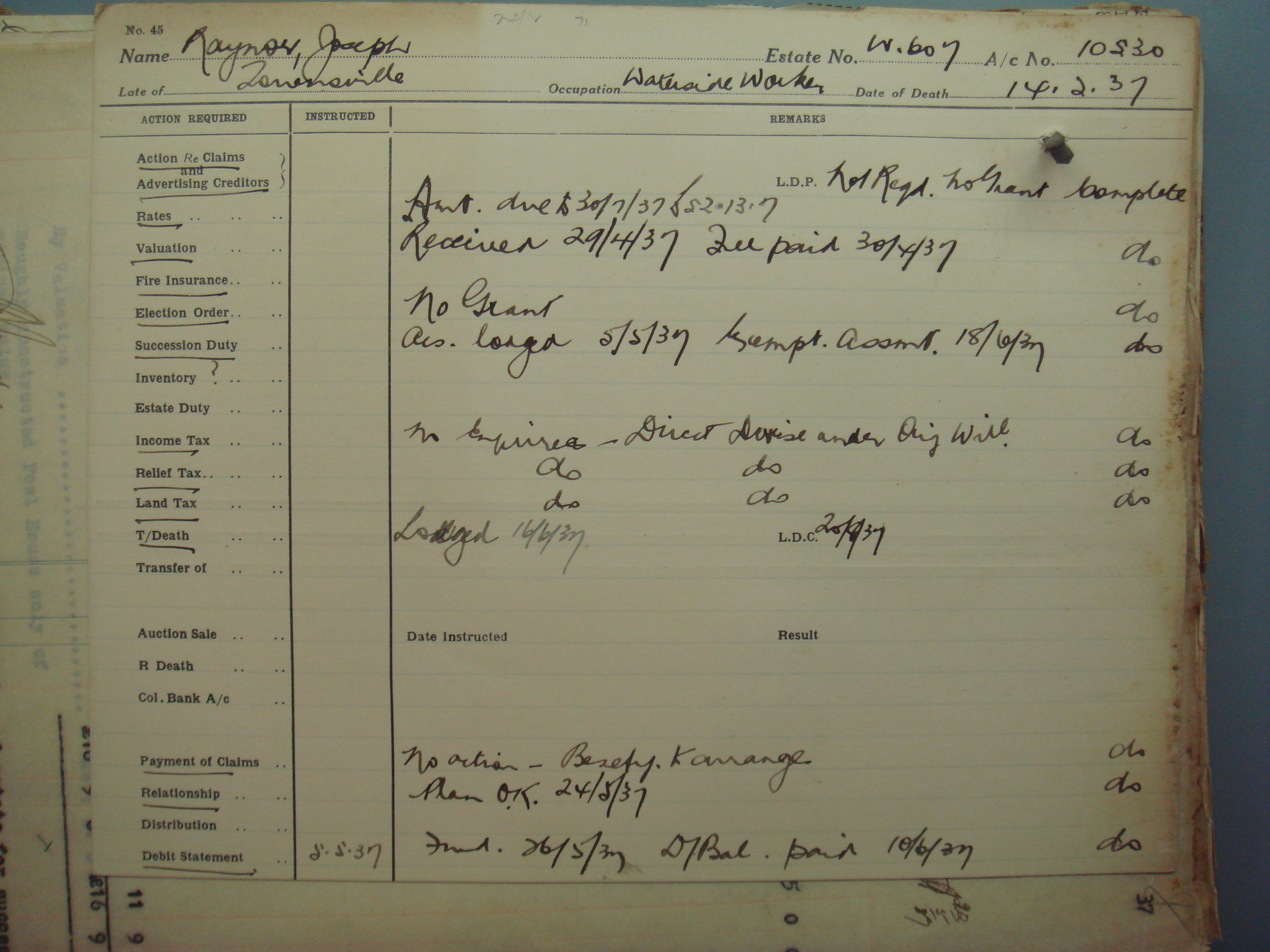
The Estate checklist for what needed to be completed in order to transfer the Joseph’s estate to Mary Jane:

Estate docs - checklist

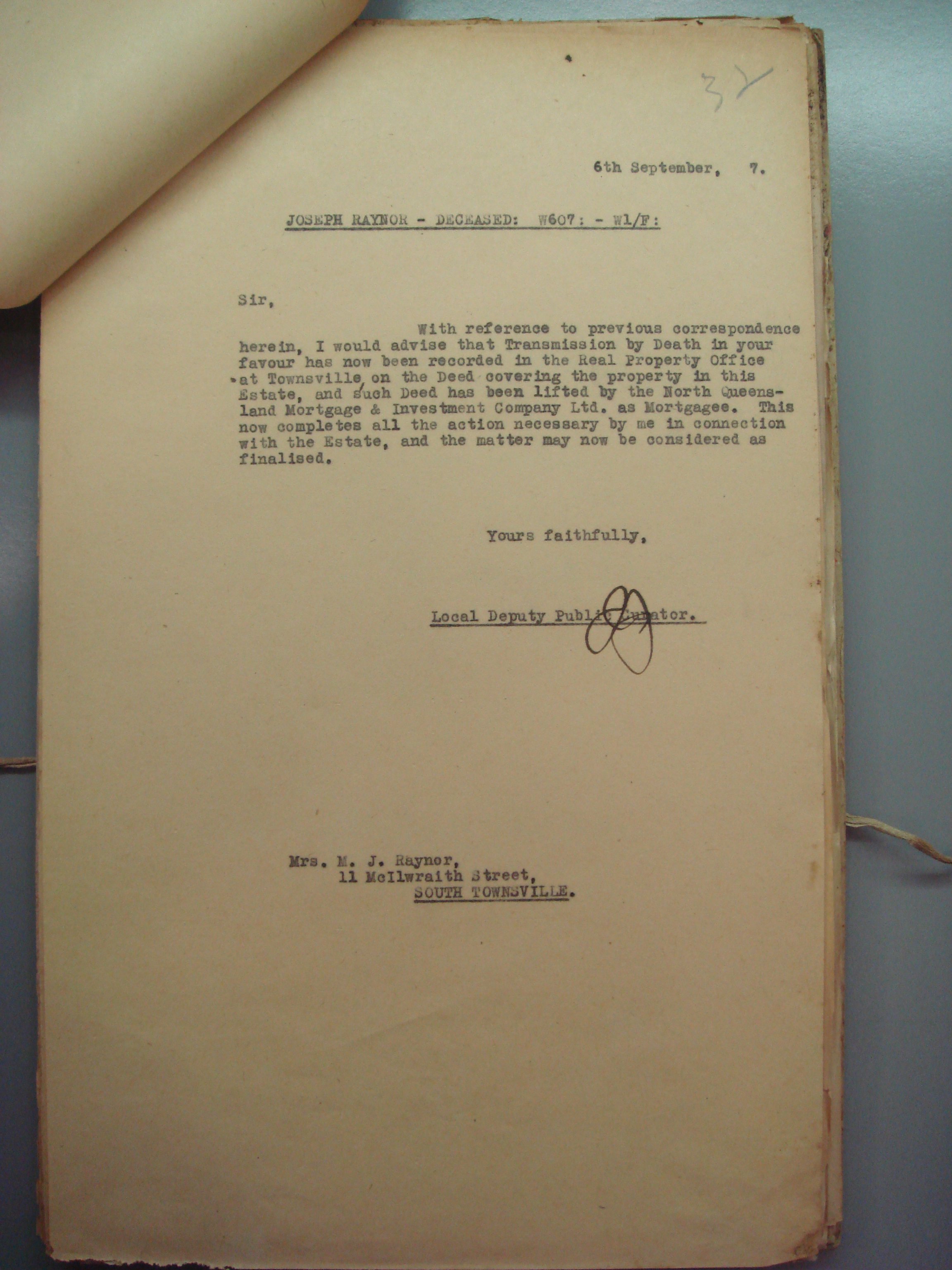
Finally in September 1937 the transfer of the property was completed

Folio 32

(note:  the public curator addressed Mrs Raynor as ‘Sir’ instead of ‘Madam’, a typist mistake probably)

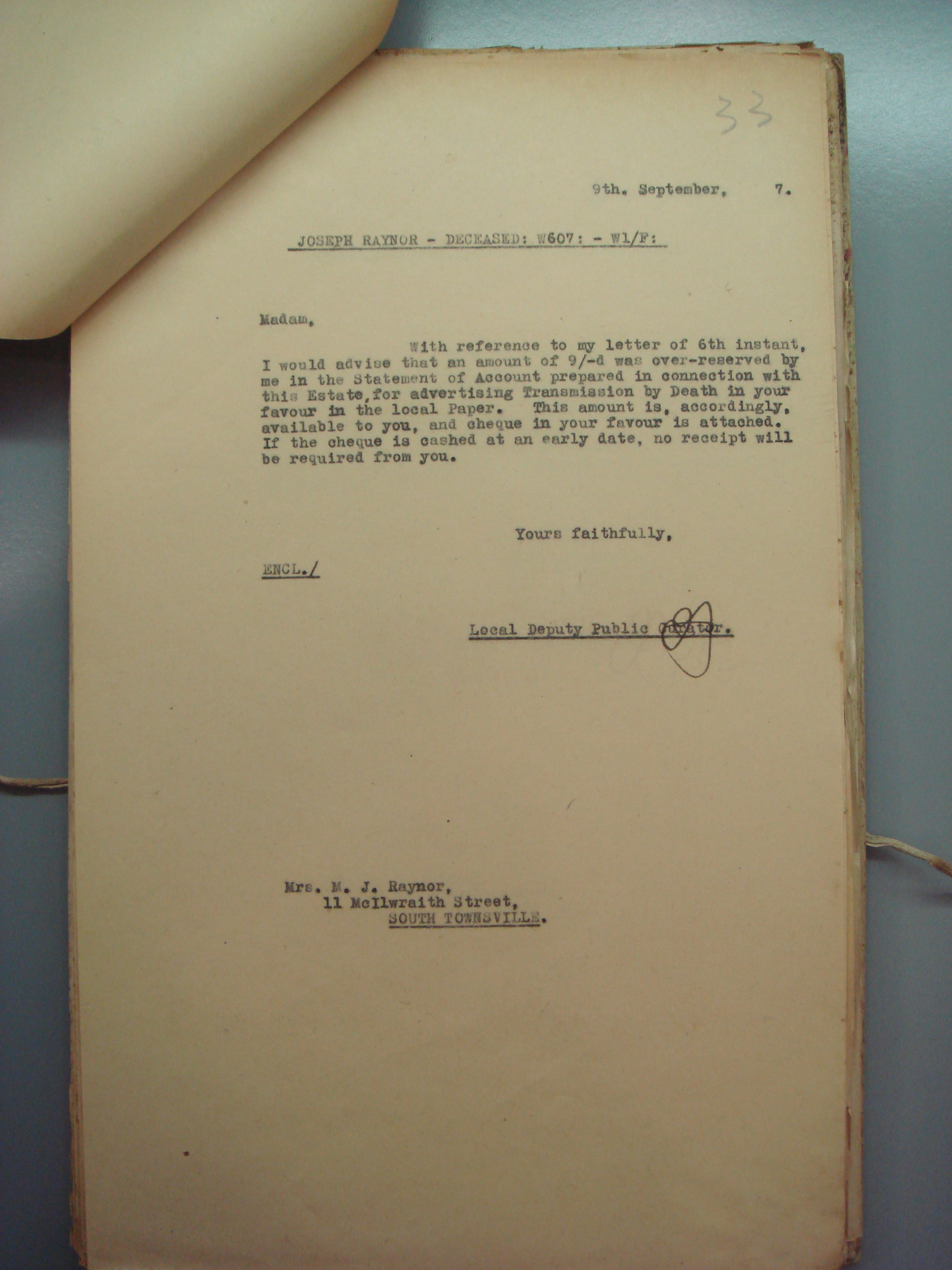
Then the public curator found some ‘change’ left over in the funds he’d made Mary Jane pay in order to finalise the estate, which he duly handed back:

Folio 33


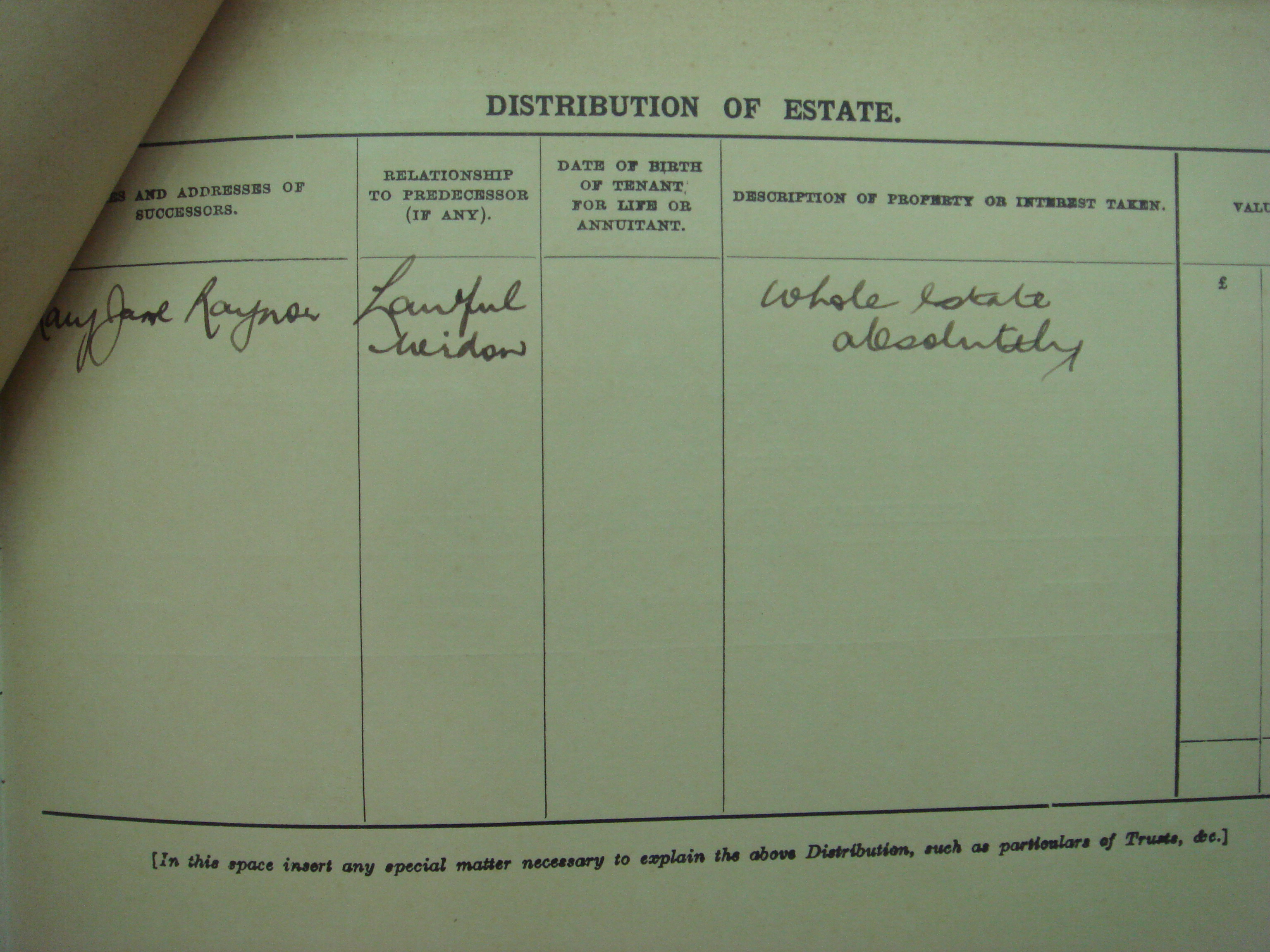
And the distribution of the estate, in accordance with Joseph’s Will:

Estate docs - distribution of estate

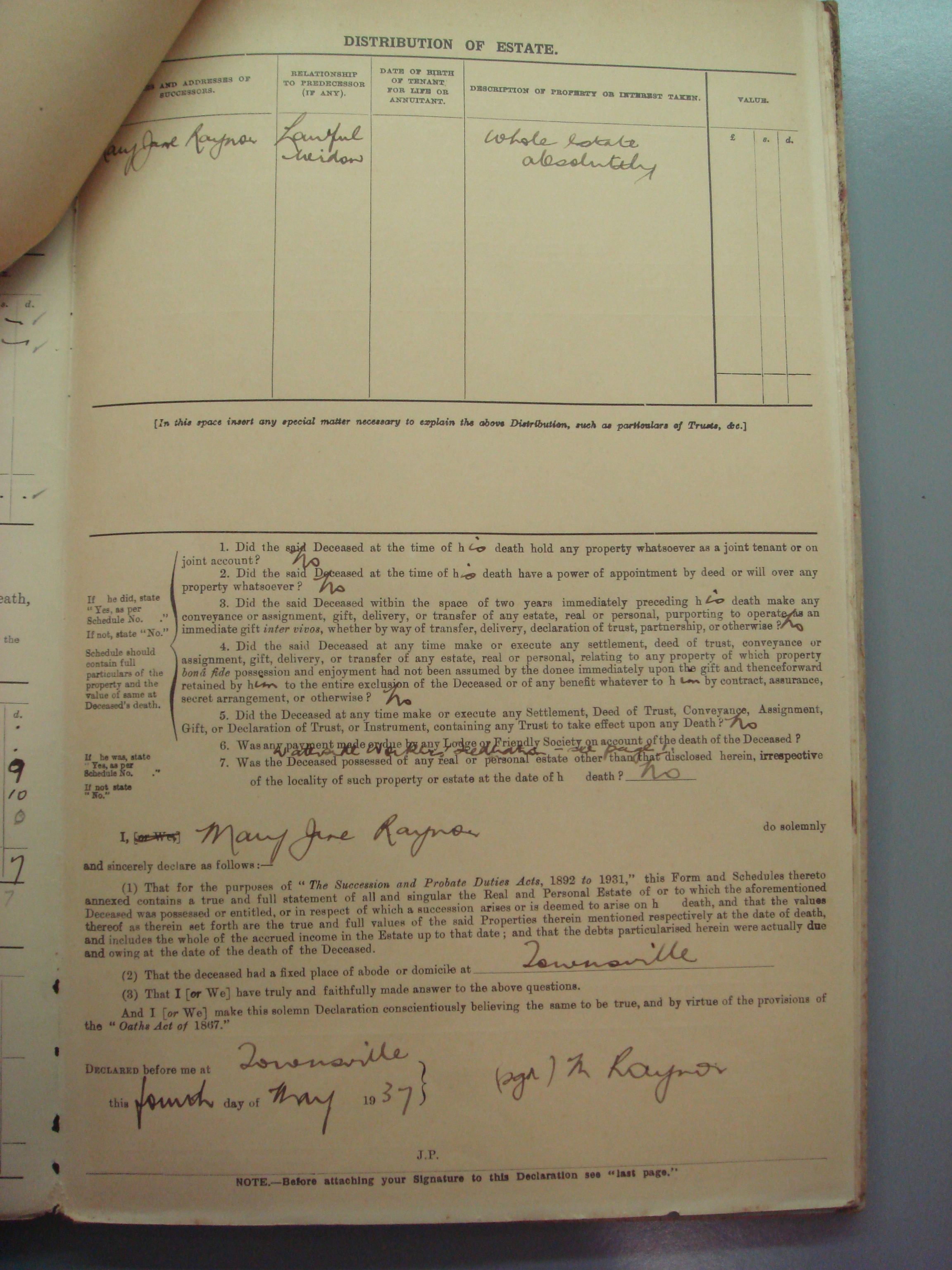
And Mary Jane signed a form which completed transfer of the Estate (the family home) into her name:

Estate docs - distribution statement

Having seen the will and estate file, there was no information or clues relating to Joseph’s sicilian family or past.  Also, there is no mention of Joseph’s brother – if he was living in Australia then, surely he would have contacted Mary Jane?  Still a mystery….


Naturalisation – Joseph Raynor

Joseph Raynor was naturalised 11 January 1899.  I visited Queensland Archives hoping to get a copy of his naturalisation application, however it is missing.  There is however a line in a naturalisation register confirming Joseph was naturalised at the Townsville Supreme Court on 11 Jan 1899.

Did Joseph change his name to Joseph Raynor when he was naturalised?  According to Queensland Archives staff, it would have been simple for Joseph to change his name – he just declared his new name and that was it.  The naturalisation process did not apparently require a strict identification process.

Why did Joseph apply for naturalisation?  Did he need to have it to be in Australia?

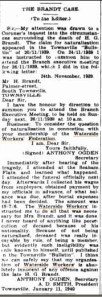
I did a search of NLA Newspapers online and did a search of Naturalisations in Townsville, as reported in the Townsville Daily Bulletin.  I came across this interesting article appearing in the Newspaper 13 January 1940:

TDB 13Jan1940 - Brandt Case

The above reads:


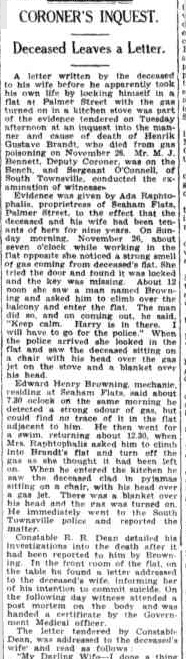
So what happened?  A Coroner’s inquest had been reported in the Townsville Daily Bulletin 11 Jan 1940 (Page 3)

TBD 11JAN40 - P3 - BRANDT (PT 1)

CORONER’S INQUEST.

Deceased Leaves a Letter.

A letter written by the deceased to his wife before he apparently took his own life by locking himself in a flat at Palmer Street with the gas turned on in a kitchen stove was part of the evidence tendered on Tuesday afternoon at an inquest into the manner and cause of death of Henrik Gustave Brandt, who died from gas poisoning on November 26. Mr. M. J. Bennett, Deputy Coroner, was on the Bench, and Sergeant O’Connell, of South Townsville, conducted the examination of witnesses.  

Evidence was given by Ada Raphtophalls, proprietress of Seaham Flats, Palmer Street, to the effect that the deceased and his wife had been tenants of hers for nine years. On Sunday morning, November 26, about seven o’clock while working in the flat opposite she noticed a strong smell of gas coming from the deceased’s flat. She tried the door and found it was locked and the key was missing. About 12 noon she saw a man named Browning and asked him to climb over the balcony and enter the flat. The man did so, and on coming out, he said, ‘Keep calm. Harry is in there. I will have to go for the police.’

When the police arrived she looked in the flat and saw the deceased sitting on a chair with his head over the gas jet on the stove and a blanket over his head. Edward Henry Browning, mechanic, residing at Seaham Flats, said about 7.30 oclock on the same morning he detected a strong odour of gas. but could find no trace of it in the flat adjacent to him. He then went for a swim, returning about 12.30, when Mrs. Raphtophalls asked him to climb into Brandt’s flat and turn off the gas as she thought it had been left on. When he entered the kitchen he saw the deceased clad In pyjamas sitting on a chair, with his head over a gas jet.   There was a blanket over his head and the gas was turned on. He immediately went to the South Townsville police and reported the matter.

Constable R. R. Dean detailed his investigations into the death after it had been reported to him by Browning.  In the front room of the flat, on the table he  found a letter addressed to the deceased’s wife, informing her of his intention to commit suicide. On the following day witness attended a post mortem on the body and was handed a certificate by the Government Medical officer.

TBD 11JAN1940 - P3 - Brandt PT2

What did the letter say?

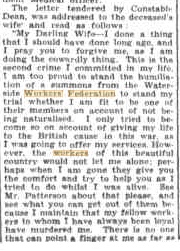
‘My Darling Wife— I done a thing that I should have done long ago, and I pray you to forgive me, as I am doing the cowardly thing. This is the second crime I committed in my life. I am too proud to stand the humiliation of a summons from the Waterside Workers’ Federation to stand my trial whether I am fit to be one or their members on account of not being naturalised. I only tried to become so on account of giving my life to the British cause in this war, as I was going to offer my services. However, the workers of this beautiful country would not let me alone; perhaps when I am gone they give you the comfort and try to help you as I tried to do whilst I was alive. See Mr. Patterson about that please, and see what you can get out of them because I maintain that my fellow workers to whom I have always been loyal have murdered me. There is no one that can point a finger at me at far as (continued next page)…….

TBD 11JAN40 - P3 - BRANDT PT3

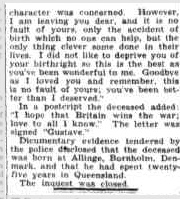
character was concerned. However, I am leaving you dear, and it is no fault of yours, only the accident of birth which no one can help, but the only thing clever some done in their lives. I did not like to deprive you of your birthright so this is the best as you’ve been wonderful to me. Goodbye as I loved you and remember, this is no fault of yours: you’ve been better than I deserved.’ In a postcript the deceased added: ‘I hope that Britain wins the war; love to all I know.’ The letter was signed ‘Gustave.’ Documentary evidence tendered by the police disclosed that the deceased was born at Allinge, Bornholm, Denmark, and that he had spent twenty five years in Queensland. The inquest was closed.

Dancing Lillian

Lillian was the daughter of Abraham and Emily and Wilson, and recorded her some of her memories of her parents, their home and her life in general in an article for ‘Remember …. Writers in Townsville‘.  The booklet contained a number of stories by older Townsville residents who talked about what life was like in Townsville in the  first half of the 20th century (1900s – 1950s).   Lillian’s story appearing in the booklet was the following:

Unable to do more than a waltz, Lillian Hatton learned specialized dance steps by mixing in the crowd that went to all the balls.  Later she took part in exhibition dancing and won Townsville competitions.

Born, Lillian Wilson, she grew up in a sculpturesque house along a dirt road between the city and Ross River.  Her father, Abraham, paid twenty pounds for the piece of land at 77 Ninth Avenue on the corner of Doorey Street in Railway Estate.  “He could have had the next block as well but never had the extra ten pounds to pay for it,” Lillian said.

Her mother, Emily Coleman was born on a North Queensland Station where her father, a builder, had gone droving.  The blacks threw spears that landed at the back door, Lillian was told.  “Grandmother had to let fire with a rifle to frighten the blacks off.”

As a child, Lillian laughed at her mother’s stories.  “Mum had a lovely lot of crockery ‘cause she came from a good home.  She told me when they first went to Railway Estate, my father put up this little humpy with hessian walls.  He oiled the hessian and she lived in that.  There was bush and a dirt road, no houses.  One day Mum walked to Garbutt, visiting and came home to find the goats had eaten the walls down.  They’d smashed her crockery and she sat down in the middle of it and cried,” Lillian said.

Abraham Wilson was sixteen, when he arrived in Australia from Ireland.  He played in brass bands when he was young and although talented, was a poor business man.  “He was a wonderful clever man, a good house painter, and he could do beautiful oil paints,” Lillian said, “but he was too soft.  People gave him a sob story and he’d do the job for half the price.”

Part of her home was built from tins.  Lillian recalls how here brother Eddie was only a kid at school and each afternoon he walked with a wooden cart to South Townsville and collected benzine tins.  After his day’s work, their father flattened these to build the house.

When Lillian and her four brothers Henry, Edward , Bill and Gordon were kids the floors were dirt.  Their mother sprinkled water, swept and it was like cement.  Her brother ended up putting in a cement floor.

Lillian said proudly, “Yes, we lived in that.  My mother liked things pretty.  Everyone who came inside was surprised.  They said it was like a little doll’s house.

“I was only telling my brother about the other day,” Lillian said, “about a boy who was in my class at school.  His family was well off.  When I was only a little girl coming home from school I walked into our house (I suppose it was a pretty poor looking place) and this boy was there with his mates.  They stood there and threw off at the house.  I never forgot that.”

When she was older, Lillian was at Picnic Bay for the Thursday night dance.  That boy, was a man and he asked could he take her home.  She refused and thought, “What an insult!”

There was a saw mill and her mother told of the days when the water was deep and big ships came down the Ross River to pick up timber. “But now it’s full of silt – wants cleaning up – that’s why the mangroves  take over.”

Oonoonaba had a few houses and Lillian and her mother walked there.  On high tide they couldn’t get through because of the gullies filled with water.  “We walked everywhere because we couldn’t afford the bus,” she said.  Her father walked to and from his job as a house painter, every day of his life.

In 1946, flood waters flowed through the windows, over ther mother’s sewing machine and the stove.  Cracks between the sheets of tin were filled with silt.  They had stretcher beds, mattresses, dining table, and chairs stacked high.  Her father had put his painter’s planks underneath the roof where there there was no ceiling and piled things on top.

Lillian worked long hours removing crockery from the mud.  “Lots of it was broken,” she remembered.

Her first marriage was a mistake. “It was a disaster, I was too young,” Lillian said.  “My mother just about reared my daughter while I was out working.”

While doing hem stitching and button holes for the Singer Machine Company in the war years, she found addresses of people overseas and sent food parcels.  An officer in the Navy tried to talk her into joining the forces.  She wanted to but couldn’t leave Gloria with her mother, it would have been too much for her.

“I can remember the end of the war, the excitement down at the railway station.  All the stores closed their doors, there was dancing in the streets, everyone grabbed you, kissing one another, cars with tin cans tied on the back going up and down streets.”

The next job she had was with Holloman’s, a large store where she was in the china department.  From there she went to Sydney for four years, worked for Berlei stitching corsets, and slipped into the dance crowd.

Since the age of nineteen, Lillian had been dancing.  In Townsville, Ann Roberts was teaching and Ray Bird knew her very well.  They went there on Thursday nights to help.  She gave them the use of her hall on a Sunday night.  Lillian won competitions for quickstep and waltzes.  “You won your heat, then the semi finals and the finals.  I was in my thirties when I won the main exhibition and danced until I was forty.  It was beautiful,” she said.

A group travelled by rail motor for a ball where Lillian and Joe Wyllie, a teacher, did an exhibition of fox trot and tango.  There was no pairing off with one another, they went as a partner.  Once she asked Noel Buckby who lived in Ninth Avenue, ‘How about coming to the ball and partner me?’ and was waiting in her long evening dress when he turned up on his motor bike.  Lillian suggested he might ring a taxi.  She laughed about those times and said, “I loved dancing, but never had photos taken.”

So when she went to Sydney, Lillian found a crowd of ballroom dancers, and made friends quickly.  She was partnered by a man who won second place in the Australian Championships.

About two years after returning to Townsville she met Jack Hatton at the Seaview dance.  He was on holidays from New South Wales.  “Jack could dance but he was not a good dancer,” Lillian said.  He found a job on earthworks, building the Mount Stuart road.  Classed as one of the best operators in Townsville, his machinery was hanging over the cliff half the time.  Jack used to say, ‘A man came up for a holiday and got snagged’.

In their first years of marriage, Lillian went back home to Ninth Avenue, while Jack was in New Guinea for the Commonwealth Department of Works.  They moved to several houses in Charters Towers Road, Tenth Avenue, Gladstone and Ninth Avenue again.

Finally Jack found a home while looking at earth moving machinery on Eleventh Avenue.  He was talking to a man working on the site and when the bank refused their loan because they didn’t have the full deposit the stranger went guarantor for one thousand dollars on the relocated council house.  They paid seven thousand dollars for house and land.  Happy with their purchase and the help they’d received, they made it a comfortable home over twenty six years.

Jack liked fishing and in the sixties they travelled to  Cape Tribulation with a boat on top of a utility he bought for two hundred dollars, and towing a poptop caravan.  It was packed to the hilt.  Jack said that Lillian always took everything but the stumps of the house.  He liked his beer too, and when they got to Mossman she had a couple of cartons under her feet.

“We were told you couldn’t get anything up there,” Lillian said.  They arrived to see a big house with a shop and gas.  “We took everything and found we could bought anything we wanted,” she said.  There were two other couples staying rainforest on the beach.  At low tide they walked out to the reef and threw a line into deep water for fish.

When Lillian sent food parcels and tinned meat to England during the war, she received small gifts in return.  She still has a cake of soap with no smell, from the The Great Exhibition  1851 to 1951 Festival of Britain, wrapped in a handkerchief.  Two scarves she’s had since the war: one that her mother tied around her hair has the coronation scene; the other is brand new, depicting the romantic city of Venice.  “Lots of things I throw out or I give away, I ‘m not a hoarder.” Lillian said.

And the most precious keepsake was given to her by one of Gloria’s boys.  “Stephen played soccer at school.  What a lovely thing for a little boy to do: he wrote a note and gave me one of his soccer badges.  I’ve put a note in with it for him.” She had three grandsons – Terry, Stephen and Darren.

Lillian has lived through the triple tragedy of losing her husband Jack, daughter Gloria and grandson Terry who died from an asthma attack.  He was well liked in soccer training and a plaque was placed at the Murray sports complex.

Lillian Hatton summed up her memories:  “I’ve had a lot of unhappiness but on the whole I’ve enjoyed my life.  The highlight was my dancing years.”

Appearing in:  ‘I remember …… Writers in Townsville’

Printed by:  WRITERS IN TOWNSVILLE

Falling Star Publishing Co

Box 5101 MSO Townsville 4810

Queensland Australia

ISBN NO: 0 9594303 1 8

Copyright:  Belongs to the individual authors.  With the authors permission, this material may be copied for non-profit making purposes
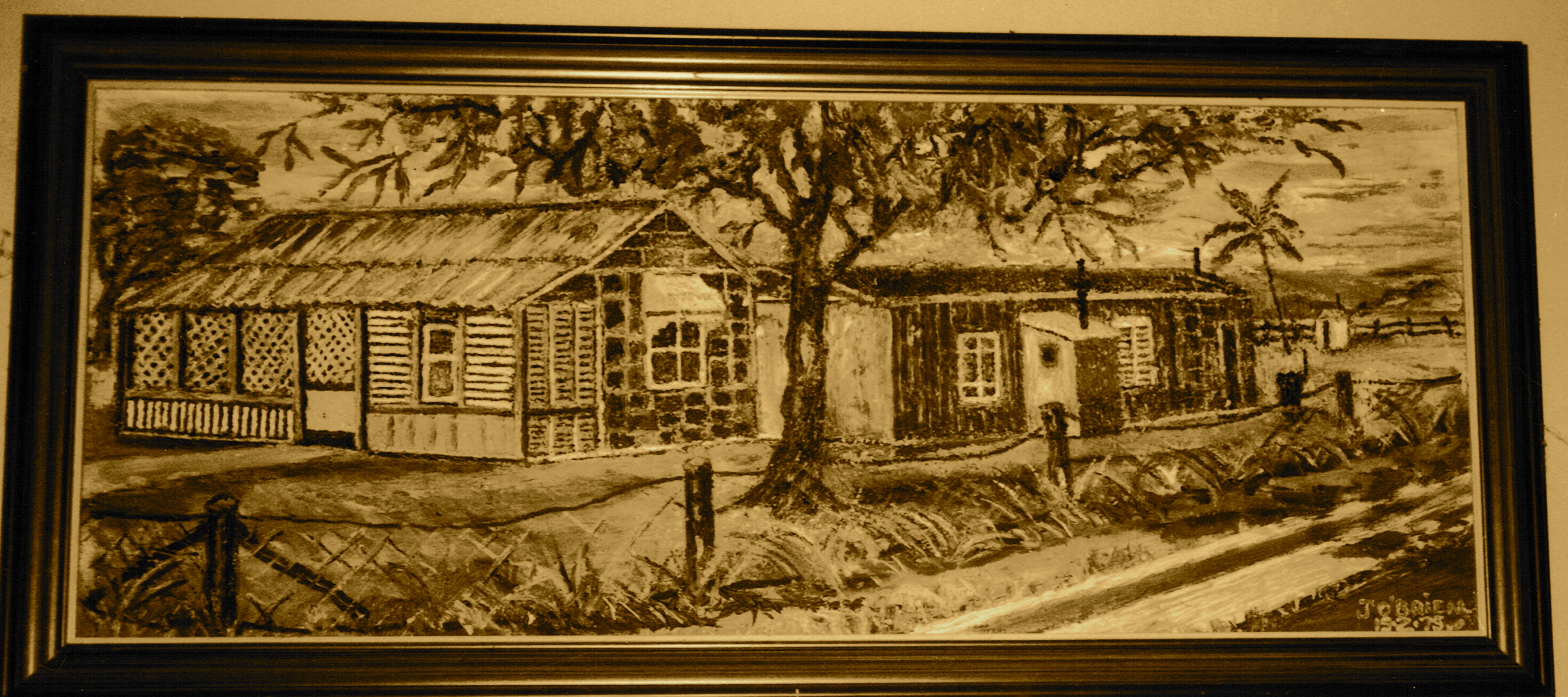
Abraham and Emily Wilson’s home – The Humpy

Pop&Home

The above painting is of the house built by Abraham Wilson, which he and Emily raised their 5 children, and lived in until 1965, when they moved to a retirement village at Pallarenda.

Abraham built a home made of flattened kerosene tins and used hessian for walls, with mud floors.  Emily kept the house meticulously clean, sweeping the mud floors to the extent the floor sloped where the broom swept most often.   One day no one was home and some goats came to the house and ate all the hessian walls.  Down one side of the house was a number of different varieties of Mangoes.
Homes built mostly with  hessian and benzine (kerosene) tins were not uncommon on Ross Island in the early 1900s.  However Abraham & Emily’s home was probably one of the last, if not the last, example of such a home on Ross Island


No photos were ever taken of the house, though the above painting was done by Jack O’Brien, nephew of Emily (Sister Ruth O’Brien’s son).  The home existed until Abraham and Emily passed away in 1969.